What Is Overlanding? A Beginner’s Guide to Vehicle Travel
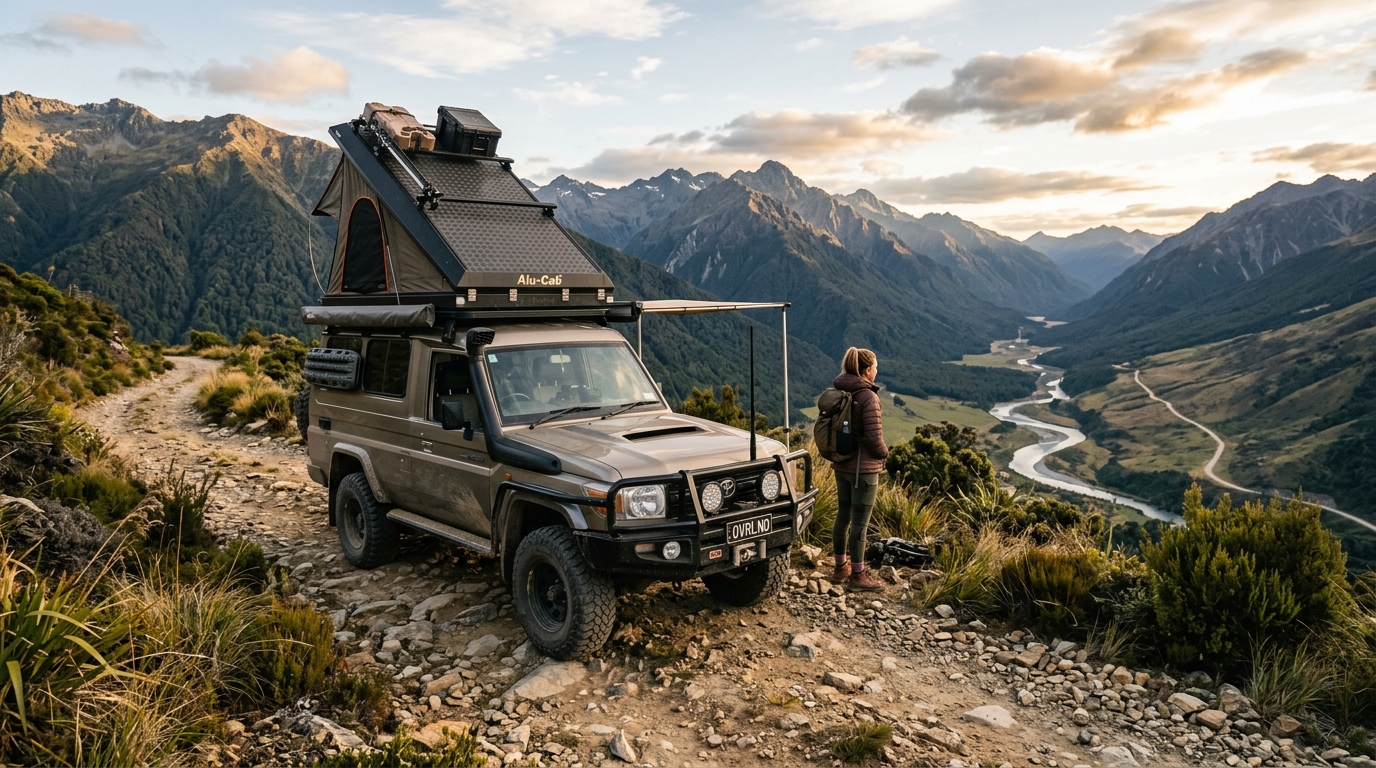
Overlanding is self-reliant vehicle travel where the journey matters as much as the destination. You load a capable vehicle with camping gear, food, water, and tools, then travel for days or months through remote terrain, sleeping wherever you stop. The term traces back to Australian and South African expeditions across land, as opposed to travel by sea or air. Scott Brady, founder of Overland Journal, defines it as “vehicle-based adventure travel where the journey is the primary goal.” That’s the cleanest definition you’ll find. The vehicle is transport, not the point.
In practice, overlanding looks different for everyone. A weekend trip on a forest road in Colorado counts, and so does a two-year drive from Alaska to Argentina. What links them is self-sufficiency. You carry what you need because there’s no hotel, no restaurant, and often no cell signal for miles.
How Overlanding Differs From Off-Roading and Car Camping
People mix these up constantly, and the differences matter when you’re shopping for gear or planning a route.
Overlanding vs. off-roading
Off-roading is about technical driving: rock crawling, mud bogs, steep climbs. The trail is the challenge. Overlanding uses rough roads to reach remote places, but the driving is a means, not the goal. Most overlanders spend 80 percent of their miles on pavement and graded gravel. A stock 4×4 with good tires handles more than beginners expect.
Overlanding vs. car camping
Car camping is a night or two at a developed campground with a picnic table and a vault toilet. Overlanding is multi-day travel through undeveloped country with no facilities. You filter your own water, manage your own waste, and often camp on public land miles from anyone. The mindset shifts from “camping trip” to “expedition.”
What You Actually Need to Get Started
You don’t need a $70,000 rig. According to Expedition Portal’s 2023 reader survey, the most common overlanding vehicle in North America is a mid-size truck or SUV, and nearly a third of respondents started with a stock vehicle they already owned. The gear list is shorter than the internet makes it look.
- Reliable vehicle: All-wheel drive or 4×4 with decent ground clearance. A Subaru Outback or Toyota Tacoma works fine for most routes.
- All-terrain tires: Your single biggest capability upgrade. Budget $800 to $1,200 for a set.
- Sleep system: A rooftop tent runs $1,500 to $3,000. A ground tent and sleeping pad cost $300 to $600 and pack smaller.
- Recovery gear: Traction boards, a shovel, and a strap. Around $200 total.
- Water and food storage: A 5-gallon jerry can plus a cooler or 12V fridge. Fridges start near $300.
- Navigation: Download offline maps. Gaia GPS and onX Offroad both work without signal. Paper maps still belong in your glovebox.
Here’s the non-obvious part. Experienced overlanders will tell you the vehicle matters less than the driver. Recovery skills, tire pressure management, and route reading prevent more problems than lockers and winches. Take a weekend 4×4 course before you buy a single accessory.
Where Overlanding Happens in North America
The U.S. has more public land than most people realize: roughly 640 million acres managed by agencies like the Bureau of Land Management and the U.S. Forest Service. Much of it allows dispersed camping, which means you can legally sleep in your vehicle or a tent for free, usually for up to 14 days in one spot.
Popular regions include:
- Utah: The White Rim Road in Canyonlands is a 100-mile classic. Permits are required and cost $36 per night.
- Colorado: The Alpine Loop near Ouray climbs above 12,000 feet and passes old mining towns.
- Pacific Northwest: Washington’s Cascade passes and Oregon’s high desert offer hundreds of forest road campsites.
- Baja California: A rite of passage for North American overlanders. The 1,000-mile peninsula has beaches you can camp on for free.
Beyond North America, the big routes are the Pan-American Highway (Alaska to Argentina), the Trans-African Highway network, and Australia’s Canning Stock Route, a 1,150-mile track across the Outback.
What Overlanding Costs
Costs split into two buckets: setup and travel.
Setup runs $3,000 to $15,000 for most beginners. That includes tires, suspension if you upgrade, a sleep system, a fridge, and basic recovery gear. You can start for under $1,000 if you already own a capable vehicle and keep it simple. A ground tent, a cooler, and a good set of tires will get you out there this weekend.
Travel costs are lower than hotel-based road trips. Dispersed camping is free. Fuel is the biggest line item: figure 15 to 20 mpg depending on your rig, and at $3.50 per gallon, a 2,000-mile trip runs about $350 to $470 in gas. Food adds $15 to $30 per person per day if you cook at camp.
Compare that to a road trip with motels and restaurants at $150 or more per night, and overlanding pays for itself fast.
Mistakes Beginners Make
Overpacking is the number one issue. Every pound costs fuel and stress. Start with less, take notes on what you actually used, and cut the rest.
Overestimating your vehicle is a close second. A lifted truck with a winch doesn’t help if you don’t know how to use it. Ground clearance and tire pressure get you through 90 percent of situations.
Skipping leave-no-trace principles is the third. Pack out all waste, bury human waste 6 to 8 inches deep and 200 feet from water, and stay on designated routes. Public land access depends on people respecting it. One careless group can get a road closed for everyone.
In practice, the best overlanders are the ones who go often, go light, and learn from every trip. You don’t need a build thread on a forum. You need a full tank and a free weekend.
Conclusion
Overlanding is vehicle-based travel that prioritizes the journey, self-reliance, and remote places over comfort and speed. Start with the vehicle you own, add all-terrain tires and a basic sleep setup, and learn recovery skills before you buy gear. The barrier to entry is lower than the internet suggests. Pick a forest road near you, load up, and go.
Q: Do I need a 4×4 to go overlanding?
No. Most overlanding routes in North America are graded gravel or easy dirt roads that all-wheel-drive crossovers handle fine. A Subaru Outback or similar vehicle with all-terrain tires covers 90 percent of beginner routes. True 4×4 matters for technical trails, deep sand, or serious mud, which you can work up to over time as your skills grow.
Q: How much does it cost to start overlanding?
You can start for under $1,000 if you already own a capable vehicle. That covers all-terrain tires, a ground tent, a sleeping pad, a cooler, and basic recovery gear. A more built-out setup with a rooftop tent and 12V fridge runs $5,000 to $15,000. Travel itself is cheap because dispersed camping on public land is free.
Q: Is overlanding legal on public land?
Yes, with rules. The Bureau of Land Management and U.S. Forest Service allow dispersed camping on most of their land, typically for up to 14 days in one location. You must stay on designated routes, pack out all trash, and follow local fire restrictions. Some areas require permits, like Utah’s White Rim Road, so check ahead before you go.
Q: Can you overland alone?
Plenty of people do, but solo travel raises the stakes. You need a satellite communicator like a Garmin inReach, since cell service disappears fast in remote country. Tell someone your route and expected return time. Practice vehicle recovery before you go alone, because there’s no second rig to pull you out if you get stuck.
Q: What’s the difference between overlanding and van life?
Van life usually centers on living in a vehicle full time, often parked near towns or working remotely. Overlanding focuses on traveling through remote terrain, with the journey as the goal. Some people do both. The overlap is real, but overlanding prioritizes vehicle capability and self-sufficiency in the backcountry rather than a fixed home on wheels.