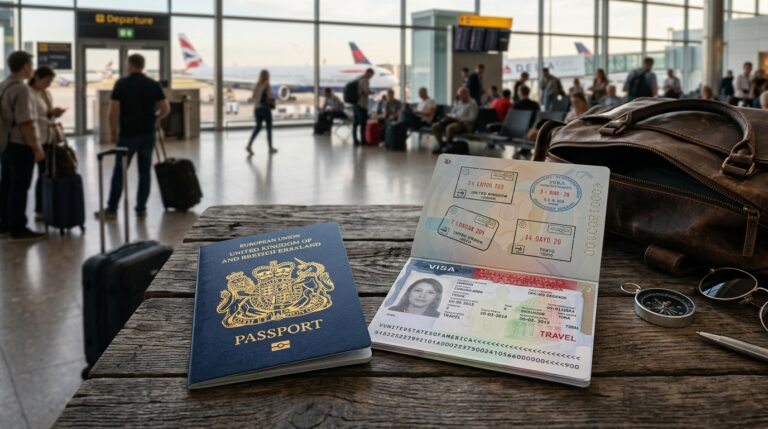
Visa on Arrival vs eVisa: Key Differences Explained
You’ve booked the flight, packed the bag, and then the question hits: do you get your visa at the airport, or do you need to sort it online before you fly? A visa on arrival and an eVisa can both get you through the same border, but they work in completely different ways. Mix them up and you could be turned away at check-in, because airlines routinely deny boarding to passengers who arrive without the correct pre-approved document.
Here’s the short version. A visa on arrival is issued to you at the border, usually at an airport immigration desk, after you land. An eVisa is an electronic approval you apply for and receive online before you travel. One happens after your flight, the other before it. Everything else, including cost, wait times, and rejection risk, flows from that single difference.
What a Visa on Arrival Actually Means
A visa on arrival (VOA) is a travel authorization granted by immigration officers when you reach your destination. You don’t apply in advance. You show up with a valid passport, sometimes a completed form and a passport photo, and pay a fee at a designated counter. The officer stamps or issues the visa on the spot.
Roughly 40 to 50 countries still offer some form of visa on arrival, according to the UN World Tourism Organization’s open visa data. Popular examples include Indonesia, Nepal, Jordan, Ethiopia, and the Maldives. Thailand has long operated a VOA scheme for citizens of certain countries, though its rules have shifted several times since 2020, so always check the current policy before booking.
What you need at the counter
Requirements vary, but most VOA desks ask for the same core items. In practice, immigration officers in countries like Indonesia also check return flight proof and may ask about accommodation.
- A passport valid for at least six months beyond your arrival date (some countries require less, but six months is the safe standard)
- Proof of onward or return travel, such as a booked ticket
- A completed arrival card or visa application form, often handed out on the plane
- One or two recent passport-sized photos
- The visa fee in local currency or US dollars, sometimes by card at newer terminals
- Sufficient funds for your stay, occasionally checked at random
The catch is queues. At busy hubs like Bali’s Ngurah Rai airport, VOA lines can stretch past 45 minutes during peak arrival windows, and that’s before you reach baggage claim. Some airports now run separate fast-track lanes for a higher fee.
What an eVisa Is and How It Works
An eVisa is an electronic visa you apply for through a government portal before you travel. You fill in your details online, upload a passport scan and photo, pay by card, and receive an approval document by email, usually as a PDF. You print it or save it to your phone and present it at immigration.
The number of countries offering eVisas has grown fast. As of 2024, more than 70 countries operate some form of electronic visa system, from Turkey and India to Kenya and Vietnam. Kenya went fully digital in January 2024, replacing visas on arrival with a mandatory electronic travel authorization for most visitors. That shift is a useful warning: VOA schemes can disappear with little notice.
Typical processing times and costs
Processing ranges from a few hours to several weeks. Turkey’s eVisa often approves within minutes for eligible nationalities. India’s e-Tourist visa usually takes three to five business days. The United States doesn’t issue an eVisa, but its ESTA system for visa waiver countries is a close cousin and costs $21 as of 2024, with most approvals arriving within 72 hours.
Fees generally sit between $20 and $100, though some countries charge more for expedited service. Watch for third-party websites that look official and add $30 to $50 in service charges. Always apply through the government domain listed on the destination country’s embassy site.
Visa on Arrival vs eVisa: The Key Differences
The two systems differ in timing, predictability, and paperwork. Here’s how they stack up side by side.
- Timing: VOA is issued after you land. eVisa approval arrives before you fly.
- Certainty: An eVisa is approved in advance, so you know your status before departure. A VOA can be refused at the counter if you lack documents or funds.
- Airline boarding: Many airlines require proof of an eVisa or visa before boarding. With a VOA-eligible passport, they’ll usually let you fly, but staff sometimes misread the rules.
- Queue time: VOA adds a stop at the immigration desk before baggage. eVisa holders often use a shorter pre-cleared lane.
- Payment: VOA fees are paid on arrival, sometimes in cash only. eVisa fees are paid online by card.
- Flexibility: VOA suits last-minute trips. eVisa rewards planning, since you need lead time for approval.
Which one is right for your trip?
If your passport qualifies for VOA and your trip is spontaneous, the on-arrival route saves you admin time. If you’re traveling with family, on a tight connection, or to a country where VOA queues are notorious, the eVisa is worth the small fee for peace of mind. A traveler landing in Delhi at 2 a.m. will be glad they sorted the e-Tourist visa in advance rather than hunting for a working card machine at the visa counter.
Common Mistakes That Cost Travelers Money and Time
Border rules are strict and unforgiving. These are the errors immigration lawyers and frequent flyers see most often.
- Assuming your nationality qualifies. VOA and eVisa eligibility is passport-specific. A US citizen may get VOA in Nepal while a Canadian passport holder faces different rules elsewhere.
- Applying too late. An eVisa that takes five business days won’t help if you fly in three. Build in a buffer of at least a week for anything beyond instant-approval systems.
- Using a lookalike site. Scam portals copy government design closely. Check the URL against the embassy’s official page.
- Forgetting the printout. Some immigration desks, including several in Southeast Asia, still ask for a physical copy even when the visa is digital.
- Missing passport validity rules. Six months of validity is standard, but countries like the Schengen area require three months beyond your departure date. Get this wrong and no visa will save you.
How to Check the Rules Before You Book
The single most reliable source is the destination country’s embassy or consulate website, not a blog or a forum post from 2019. The International Air Transport Association’s Travel Centre also publishes visa requirements by passport and destination, and airlines use the same database at check-in, so it’s a good preview of what staff will see.
In practice, I recommend a three-step check. First, confirm the visa type on the embassy site. Second, verify processing time against your departure date. Third, screenshot the approval and save it offline, because airport Wi-Fi fails at the worst moments. If the rules changed in the last 12 months, as Kenya’s did in 2024, trust the official page over any third-party summary.
Conclusion
A visa on arrival is issued at the border after you land. An eVisa is approved online before you fly. Both can work well, but the eVisa gives you certainty and usually a faster airport experience, while the VOA suits spontaneous trips to countries that still offer it. Check your passport’s eligibility, confirm processing times, and apply through the official government site. Do that, and the only line you’ll stand in is for coffee.
Q: Can I get a visa on arrival if I haven’t applied in advance?
Yes, that’s the whole point of a visa on arrival. You land, go to the designated counter, and the immigration officer issues the visa after checking your passport, return ticket, and fee payment. Just confirm your nationality qualifies before you fly, because eligibility is passport-specific and airlines may deny boarding if you don’t meet the rules.
Q: Is an eVisa the same as a visa on arrival?
No. An eVisa is applied for and approved online before you travel, and you present the approval at immigration. A visa on arrival is issued at the border after you land. The eVisa gives you certainty before departure and often a shorter immigration queue, while the VOA suits last-minute trips to countries that still offer it.
Q: How long does an eVisa take to process?
It varies widely. Turkey’s eVisa often approves within minutes for eligible passports, while India’s e-Tourist visa typically takes three to five business days. Some countries need two weeks or more. Apply at least a week before departure for anything beyond instant-approval systems, and always check the official government portal for current timelines.
Q: Can a visa on arrival be refused at the airport?
Yes. Immigration officers can refuse a visa on arrival if you lack a return ticket, have insufficient funds, or your passport doesn’t meet validity rules. There’s also the risk that the scheme changed since you booked. An eVisa approved in advance removes most of that uncertainty, which is why many travelers prefer it for family trips and tight connections.
Q: Do I need to print my eVisa?
Many countries still ask for a physical copy at immigration, even when the visa is digital. Several Southeast Asian and African immigration desks require a printed PDF. Print two copies and save one offline on your phone. Airport Wi-Fi and mobile data can fail right when you need them most, so don’t rely on a live connection.