What Is Considered a Good AQI? The Full Scale Explained
An AQI of 0 to 50 is rated “Good” by the US EPA and is safe for every person, including children, elderly adults, and people with asthma. The right threshold depends on your…
Explore AQI Basics to learn what Air Quality Index is, how it is calculated, what each level means, and how to read AQI numbers to stay safe every day.
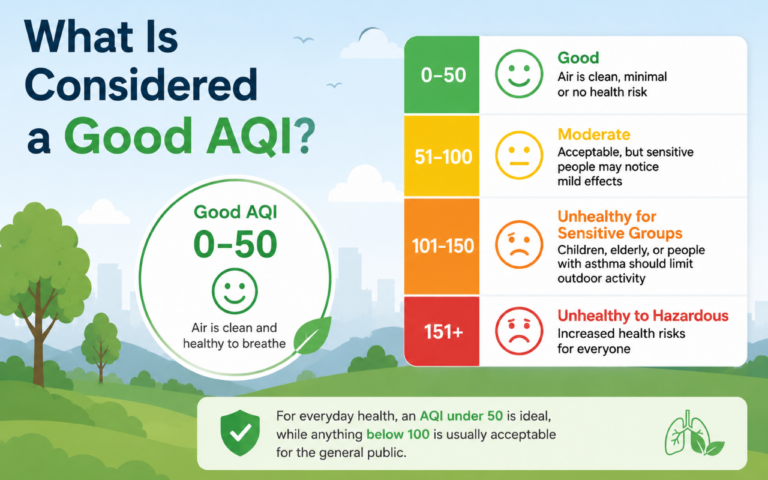
An AQI of 0 to 50 is rated “Good” by the US EPA and is safe for every person, including children, elderly adults, and people with asthma. The right threshold depends on your…
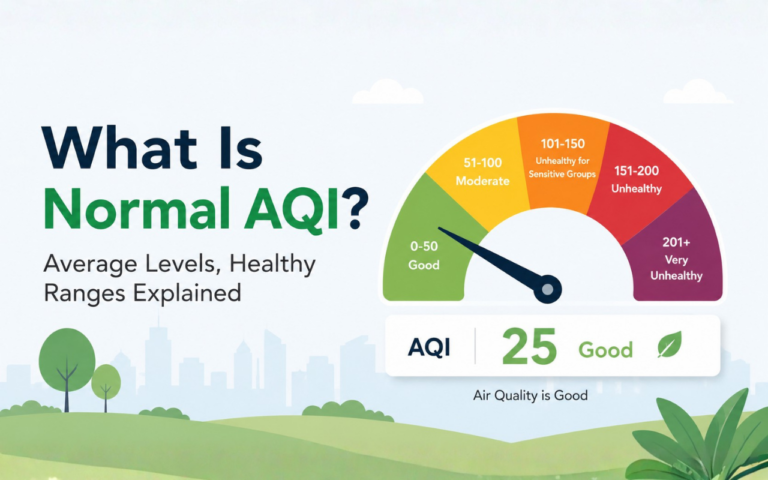
Normal AQI depends heavily on where you live and what time of year it is, which is why the same reading can feel routine in one city and alarming in another. The US…
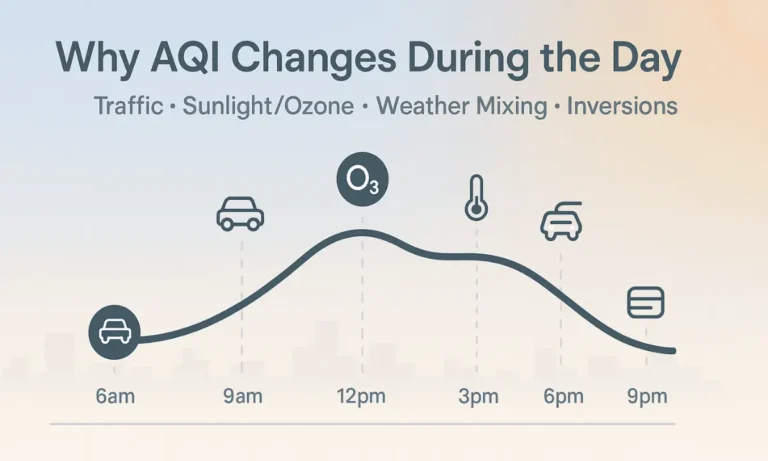
AQI changes throughout the day because pollution levels and weather conditions constantly change.Traffic, industrial activity, temperature, wind, and sunlight all affect how pollutants build up or disperse at different times. Many people notice…
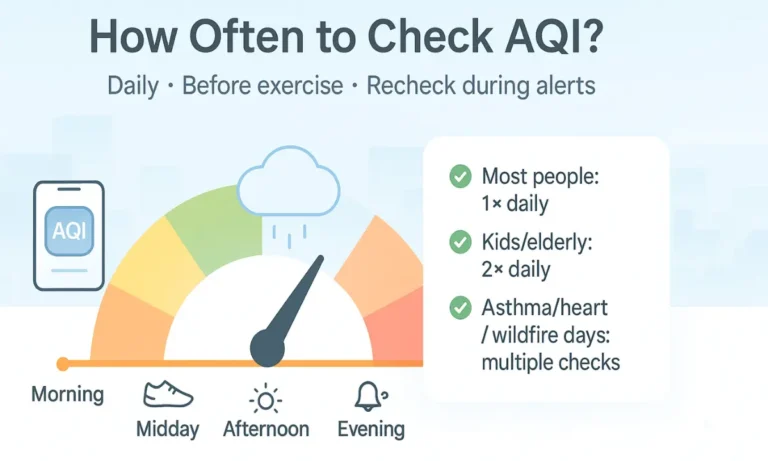
You should check the AQI daily, especially if you spend time outdoors.If you have asthma, heart problems, or live in a polluted area, it’s best to check it several times a day before…
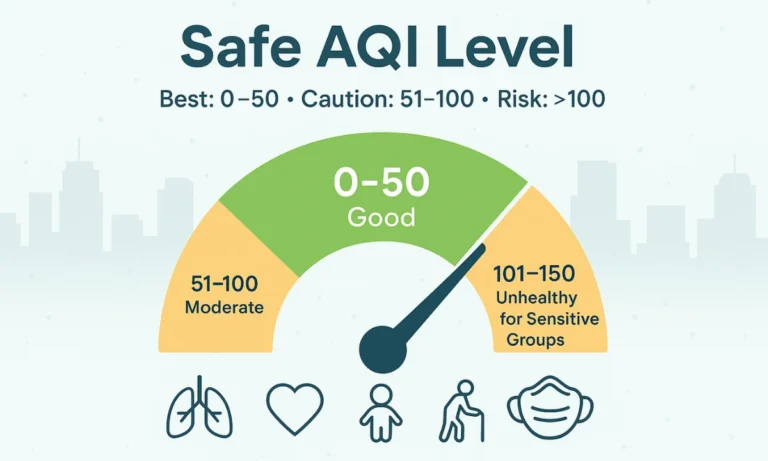
A safe AQI level is 0–50, which means the air is clean and healthy to breathe. At this level, outdoor activities are safe for everyone, including children, older adults, and people with asthma…
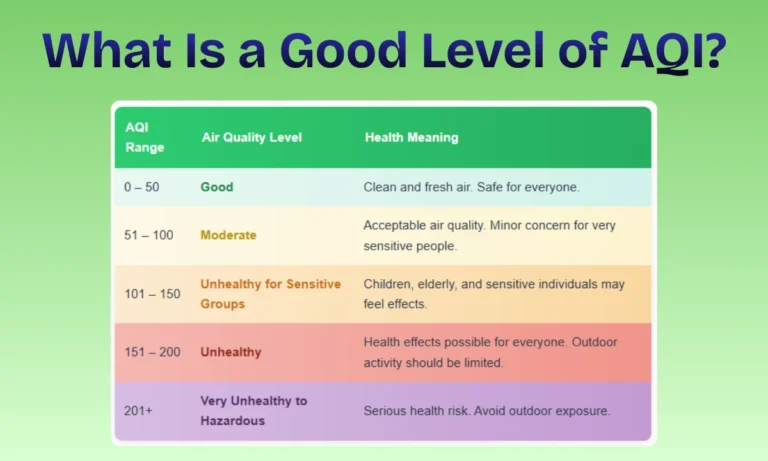
A good level of AQI is between 0 and 50. At this level, the air is clean and safe to breathe, with no health risk for anyone, including children, elderly people, and those…
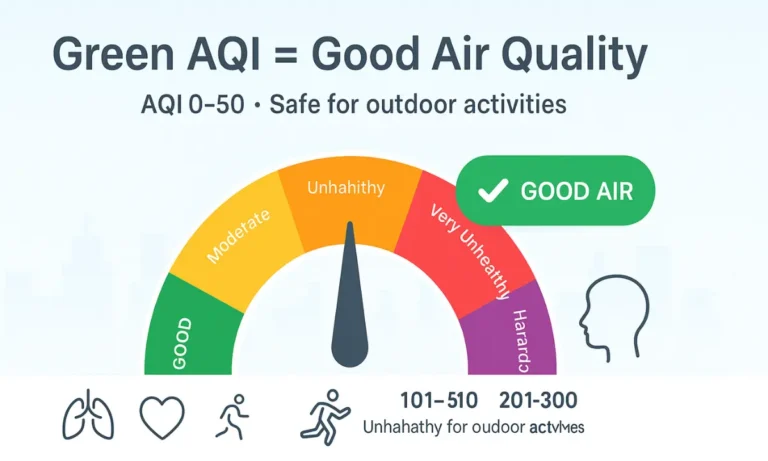
green AQI color means good air quality. It indicates clean, healthy air that is safe for everyone. Green AQI supports normal outdoor activity and indoor ventilation without added health risk. It is the…
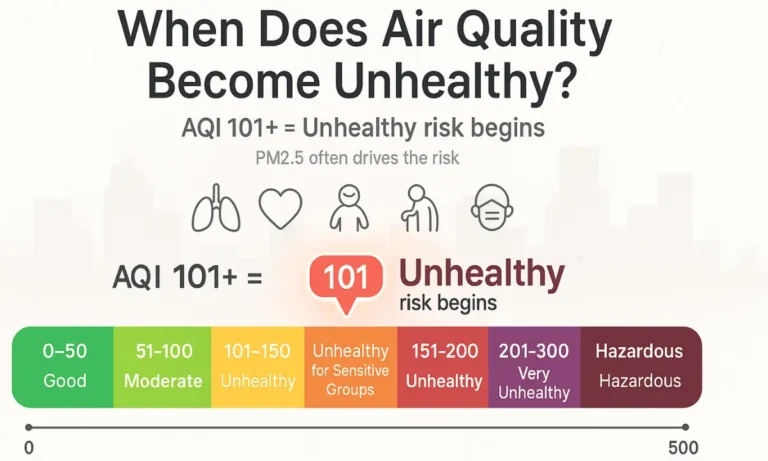
Air quality becomes unhealthy when the Air Quality Index (AQI) rises above 100.At this level, sensitive groups may start experiencing health effects, and as AQI increases further, it can affect everyone. Every breath…