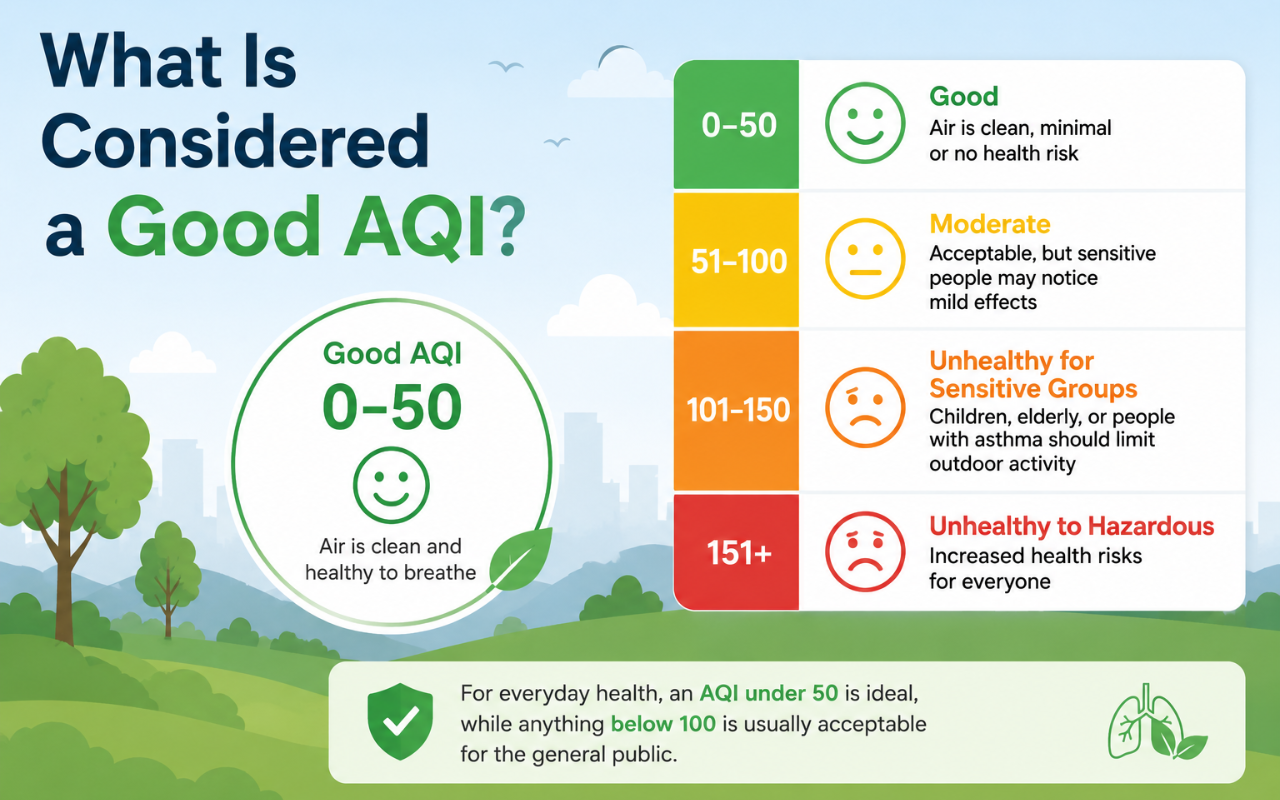
An AQI of 0 to 50 is rated “Good” by the US EPA and is safe for every person, including children, elderly adults, and people with asthma. The right threshold depends on your activity, your health, and which specific pollutant is pushing the number up. This guide covers the full scale with real numbers and gives you activity-specific thresholds most AQI articles skip.
What the Air Quality Index Measures
The Air Quality Index is a 0 to 500 scale created by the US Environmental Protection Agency to convert raw pollution data into a single readable number. A score of 100 corresponds exactly to the national air quality standard for the worst pollutant recorded at that moment. That makes AQI 100 a regulatory limit, not a safe midpoint.
Six pollutants feed into the calculation at monitoring stations across the country: PM2.5 (fine particles under 2.5 microns), PM10 (coarse particles under 10 microns), ground-level ozone, carbon monoxide, sulfur dioxide, and nitrogen dioxide. The number shown in a weather app reflects the single worst-performing pollutant at that time, not an average of all six. If wildfire smoke pushes PM2.5 up while everything else stays low, the displayed AQI reflects PM2.5 alone. Real-time hourly data in the US comes from over 4,000 monitoring stations tracked at AirNow.gov. Knowing which pollutant is behind the number changes how you should respond to it.
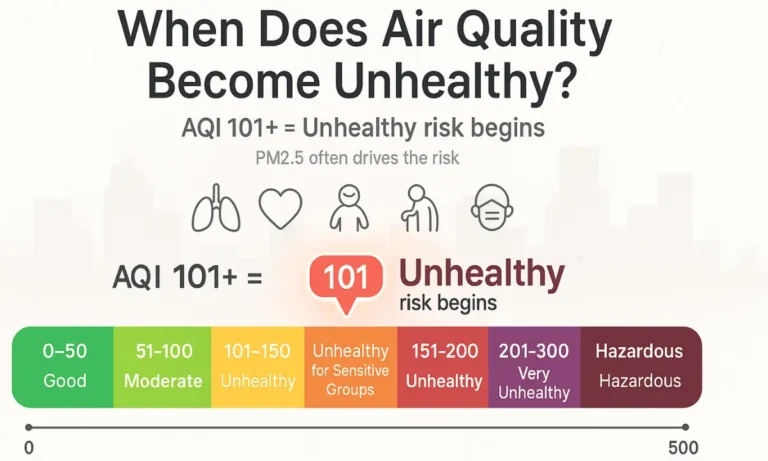
The Complete AQI Scale and What Each Level Means
Most weather apps show only the color code. The full picture includes a category name, a defined range, and a specific group of people affected at each level.
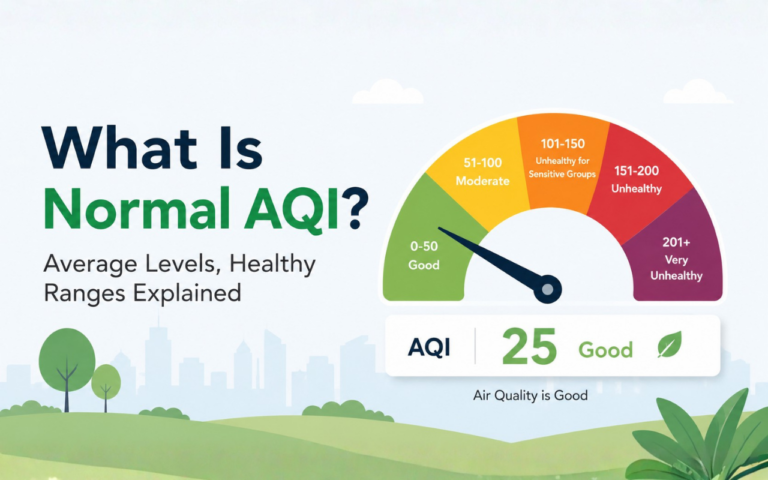
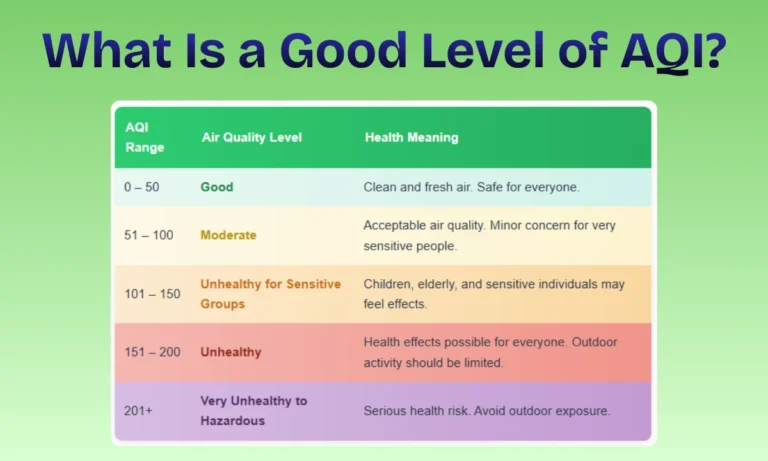
| AQI Range | Category | Color | Who Is Affected |
|---|---|---|---|
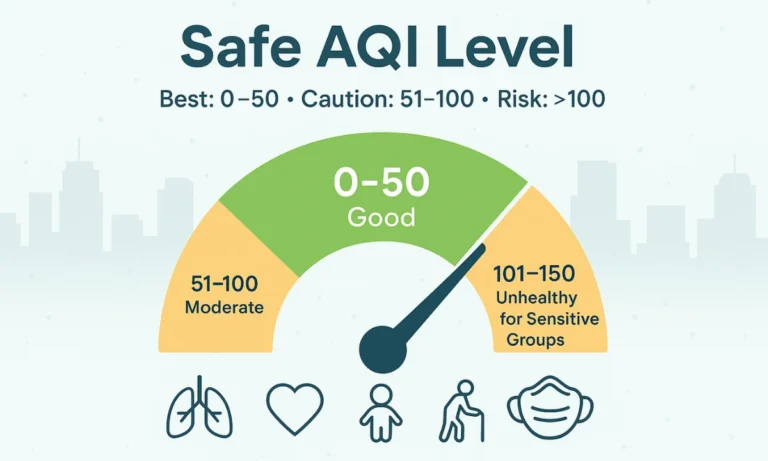
| 0 to 50 | Good | Green | Nobody. Safe for all groups without restriction. |
| 51 to 100 | Moderate | Yellow | Unusually sensitive individuals may notice minor effects. |
| 101 to 150 | Unhealthy for Sensitive Groups | Orange | Children, elderly, people with asthma, COPD, or heart disease. |
| 151 to 200 | Unhealthy | Red | Everyone may begin to feel effects. |
| 201 to 300 | Very Unhealthy | Purple | Serious health effects across the general population. |
| 301 to 500 | Hazardous | Maroon | Emergency conditions. The entire population is at risk. |
AQI 0 to 50: Safe for Everyone, No Exceptions
At AQI 0 to 50, PM2.5 concentrations sit below roughly 12 micrograms per cubic meter, within the EPA annual standard and close to the WHO 2021 guideline of 15 micrograms per cubic meter for a 24-hour period. *(Verify current WHO Air Quality Guidelines at who.int before publishing.)* Even people with moderate asthma or cardiovascular conditions can spend unlimited time outdoors at this level. Readings below 25 represent genuinely clean air, the kind typically seen on clear mornings after overnight rain in low-traffic areas.
AQI 51 to 100: Acceptable, But Not Equal for Everyone
AQI 52 and AQI 98 share the same yellow label but they do not represent the same air quality. The EPA flags this band with a specific caveat: unusually sensitive people should consider reducing prolonged or heavy outdoor exertion. In practice, that covers roughly 1 in 10 adults, specifically those with moderate-to-severe asthma, active respiratory infections, or serious cardiovascular disease. For healthy adults, normal daily activity under AQI 100 carries no meaningful health risk.
The pollutant driving the number matters here too. AQI 85 from PM2.5 poses a greater lung health risk than AQI 85 from ground-level ozone, which mainly causes problems during intense physical effort. AirNow.gov shows the full pollutant breakdown for anyone who needs that level of detail.
AQI 101 and Above: Where Healthy Adults Enter the Risk Zone
Cross AQI 100 and the EPA’s guidance stops being limited to sensitive groups. At 101 to 150, prolonged vigorous exercise outdoors carries measurable risk even for healthy adults with no prior respiratory conditions. At 151 to 200, everyone should limit extended time outside regardless of fitness level. Above 200, the recommendation is to stay indoors with windows closed and a HEPA air purifier running. During wildfires, AQI can climb from 50 to 350 within a few hours, which makes a morning reading completely unreliable by afternoon. The numbers only help if you know what to do with them based on your specific activity and health situation.
Good AQI by Activity: Thresholds That Actually Help
Risk from air pollution scales with breathing rate, time spent outdoors, and lung sensitivity. The same AQI reading calls for different responses depending on who you are and what you are doing.
- Running or cycling: Ideal below AQI 50. Healthy adults can train normally at 51 to 100. Reduce intensity and cut duration at 101 to 150 (a 30-minute walk instead of a 60-minute run is a practical swap). Move workouts indoors above 150.
- Children playing outside: Unrestricted below AQI 50. Limit vigorous play and shorten outdoor time at 51 to 100. Keep children indoors above 100. Children breathe more air per kilogram of body weight than adults and their lungs are still developing, so exposure risk per hour outside is proportionally higher.
- Opening windows for ventilation: Open freely below AQI 50. Check the PM2.5 sub-index before opening at 51 to 100. Keep windows closed and run an air purifier above 100. On genuinely clean outdoor days (AQI under 40), indoor PM2.5 from cooking, candles, and cleaning products often runs higher than outside, so ventilation helps in those cases.
- People with asthma or COPD: All outdoor activity is safe below AQI 50. Limit extended outdoor time and avoid peak exertion at 51 to 100. Stay indoors above 100. For this group, the Moderate yellow band is a real action threshold, not a theoretical caution flag. See managing asthma during poor air quality days for a full protocol.
- Outdoor manual work and yard work: No restrictions below AQI 75. Take scheduled breaks and avoid the 12pm to 4pm ozone window at 76 to 150. Postpone non-essential outdoor tasks above 150.
These are starting points. Anyone with a diagnosed respiratory or cardiovascular condition should confirm personal thresholds with a doctor before relying on general guidance.
Why the Same AQI Number Differs Between Countries
The US EPA scale is not a global standard. A reading of 75 on a Chinese air quality app does not represent the same pollution exposure as 75 on AirNow. Countries use different PM2.5 concentration breakpoints and calculation methods, which makes raw cross-border comparisons unreliable.
- United States (EPA AQI): 0 to 500 scale. AQI 100 equals the national standard for the worst pollutant measured at that time.
- China: Similar 0 to 500 structure but higher PM2.5 thresholds per band. A Chinese AQI of 75 corresponds to more actual PM2.5 than a US AQI of 75.
- India: 0 to 500 with its own breakpoint calculations. Good is still 0 to 50 but pollution concentrations within each band differ from the US formula.
- Europe (CAQI): The Common Air Quality Index runs 0 to 100-plus. Direct numerical comparison to US AQI does not work.
- WHO 2021 Guidelines: Sets a stricter PM2.5 24-hour limit of 15 micrograms per cubic meter, tighter than the top of the US EPA Good range.
If you use a global weather app while traveling, check whether it shows the local country’s formula or converts to US EPA AQI. For health decisions abroad, cross-reference with reading air quality data when traveling internationally.
Four Mistakes People Make When Reading AQI
Checking AQI before going outside is a good habit. Most people get the number right and read it wrong.
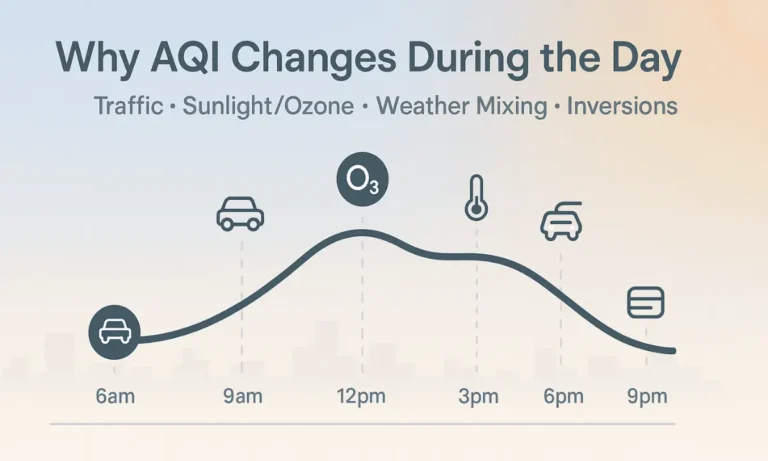
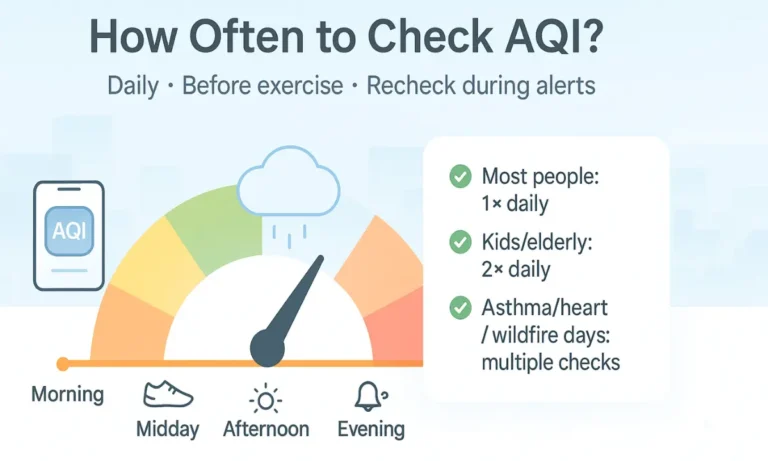
- Using a daily average instead of the current hourly reading: AQI shifts significantly throughout the day. Cities often spike to 110 to 130 during the 8am to 10am commute, then again when ozone peaks in early afternoon on sunny days. A daily average of 65 can sit on top of a midday reading of 120. Always check the hourly figure on AirNow.gov before heading out.
- Treating Moderate as Good: The yellow 51 to 100 band is acceptable, not good. Sending a child with asthma outside for two hours at AQI 90 because it is “under 100” is a common and avoidable mistake. For sensitive groups, Moderate is a threshold for action. See AQI safety for sensitive groups for a full breakdown.
- Checking composite AQI and ignoring PM2.5: If anyone in your household has a respiratory condition, track PM2.5 specifically rather than the overall AQI number. PM2.5 has the strongest documented link to lung inflammation and long-term cardiovascular risk. AirNow.gov shows the full pollutant breakdown at no cost.
- Assuming indoor air is always cleaner: On high-AQI days, staying inside is the right call. On genuinely clean outdoor days (AQI under 40), indoor PM2.5 from gas stoves, candles, and synthetic cleaning products often runs higher than outside. Opening windows on those days actively improves indoor air quality.
Conclusion
AQI 0 to 50 is the only range that is genuinely safe for every person without any caveats. The 51 to 100 band is fine for most healthy adults but should not be treated as good when making decisions for children, elderly adults, or anyone with asthma or heart disease. Switching from daily average readings to hourly data on AirNow.gov and checking PM2.5 specifically are the two most practical changes most people can make. If you have a respiratory or cardiovascular condition, confirm your personal safe thresholds with your doctor before relying on general AQI guidance.
Frequently Asked Questions
What AQI is safe for outdoor exercise?
For healthy adults, AQI under 100 is safe for all outdoor exercise. At 51 to 100, most people can train normally, though those with asthma or heart conditions should reduce intensity. Above 100, shorten vigorous sessions. Above 150, skip outdoor exercise entirely regardless of fitness level.
Is an AQI of 50 good or bad?
AQI 50 sits at the top of the Good category and represents clean air with no health risk for any group, including children, elderly adults, and people with asthma. It corresponds to PM2.5 concentrations near the EPA annual standard. Any reading at or below 50 is genuinely good air quality by US standards.
At what AQI should I be concerned?
For healthy adults, AQI 100 is the practical point to start adjusting behavior. Reduce vigorous outdoor activity at 101 to 150. Limit time outside for everyone at 151 to 200. Stay indoors with windows closed above 200. During wildfire events, check hourly readings rather than daily averages as levels can spike sharply within a few hours.
What is a good AQI for someone with asthma?
For people with asthma, below AQI 50 is safe for all outdoor activity. The 51 to 100 range requires caution, especially for vigorous exertion. Above AQI 100, outdoor physical activity should be avoided. Exact thresholds vary with asthma severity and current medication, so confirm with your doctor what applies to your specific situation.
Does AQI change throughout the day?
Yes, significantly. AQI is recalculated every hour at most monitoring stations. Levels typically rise during morning rush hour from traffic-driven PM2.5, peak again for ozone in early afternoon on sunny days, and drop to their lowest in the early morning before traffic builds. A single daily average can hide intraday spikes of 40 to 60 points at predictable times.