Yes, indoor air can be safer than outdoor air, especially during high pollution events-but only if indoor air is actively managed. Simply staying inside does not automatically guarantee protection. Indoor air safety depends on filtration, ventilation timing, and control of indoor pollution sources. Without these measures, indoor air can become equally polluted or even worse than outdoor air. The key difference is not location, but air management.
Understanding the Difference Between Indoor and Outdoor Air
Outdoor air quality is shaped by large-scale atmospheric processes such as wind, sunlight, temperature, and regional emissions. Indoor air quality, on the other hand, is controlled by building design, ventilation, and human activity. Outdoor pollution disperses over large areas, while indoor pollution can accumulate in enclosed spaces. Because people spend most of their time indoors, exposure duration becomes a critical factor. Even moderate indoor pollution can have significant long-term health effects.
Why Exposure Time Matters More Than Location
Most important difference between indoor and outdoor air is how long you are exposed. People usually spend limited time outdoors, even on polluted days. Indoors, exposure often lasts many continuous hours. This means that lower pollutant concentrations indoors can still cause harm over time. Health risk is determined by concentration multiplied by exposure duration. This is why indoor air quality deserves equal or greater attention.
What Determines Outdoor Air Quality
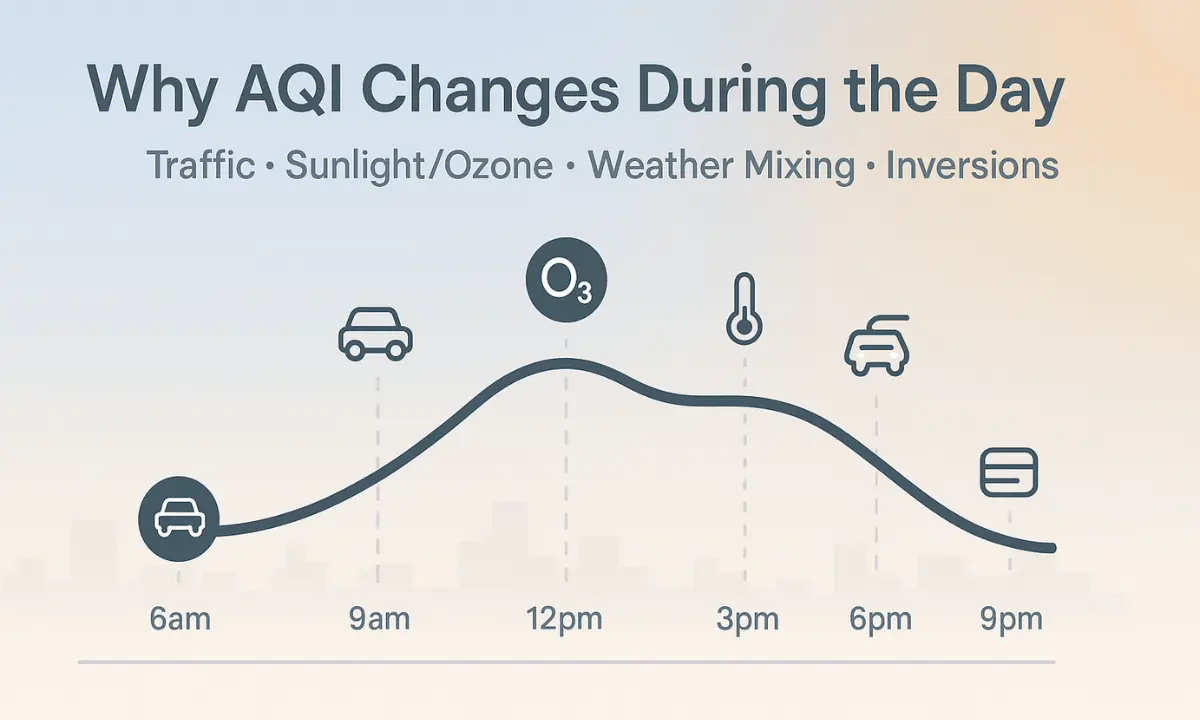
Outdoor air quality is commonly measured using the Air Quality Index (AQI), which reflects the most harmful pollutant present at a given time. Outdoor AQI changes constantly due to traffic patterns, industrial activity, weather, and natural events. Pollutants disperse or accumulate depending on wind, sunlight, and atmospheric stability. High outdoor AQI is linked to respiratory irritation, heart stress, and increased hospital admissions. Outdoor air is highly variable and often unpredictable.
Key Factors That Influence Outdoor Air Quality
Outdoor AQI is driven by several major factors. Traffic emissions increase pollution during rush hours. Industrial and power-generation activity adds continuous emissions. Weather conditions such as wind, temperature, and sunlight control dispersion and chemical reactions. Natural events like wildfires, dust storms, and seasonal burning can rapidly raise pollution levels. These factors often interact, creating sudden AQI spikes.
What Is Indoor Air Quality (IAQ)?
Indoor air quality (IAQ) describes the air inside homes, offices, schools, and other enclosed spaces. Unlike outdoor AQI, IAQ is rarely publicly reported or regulated. Yet people spend nearly 90% of their time indoors, making IAQ critically important. Indoor air behaves differently because pollutants do not disperse easily. Without proper ventilation and filtration, contaminants can persist for long periods.
Primary Factors That Shape Indoor Air Quality
Indoor air quality is influenced by ventilation systems, airflow patterns, and building tightness. Daily activities such as cooking, cleaning, and heating generate pollutants indoors. Outdoor pollution can infiltrate through windows, doors, and cracks. Because indoor environments are enclosed, pollutants accumulate rather than disperse. Long exposure duration amplifies health risk.
When Indoor Air Is Safer Than Outdoor Air
Indoor air is often safer during periods of high and persistent outdoor pollution. This includes traffic-related smog, wildfire smoke, dust storms, and extreme heat events with high ozone. In these situations, staying indoors with windows closed and effective filtration can dramatically reduce pollutant exposure. Sensitive groups benefit the most from indoor protection. However, safety depends on active air management.
Conditions That Make Indoor Air More Dangerous
Indoor air can become more polluted than outdoor air when ventilation is poor and pollutants are generated indoors. Continuous cooking, smoking, burning candles, or using strong chemicals rapidly degrades IAQ. Outdoor pollution can enter and become trapped inside sealed buildings. Without filtration, indoor pollutant levels may rise higher than outdoor levels. This is why indoor air safety is not automatic.
Common Outdoor Pollutants That Affect Health
Outdoor air pollution typically includes fine particles (PM2.5 and PM10), ground-level ozone, nitrogen dioxide, sulfur dioxide, and carbon monoxide. PM2.5 is especially dangerous because it penetrates deep into the lungs and bloodstream. Ozone irritates lung tissue and worsens asthma. These pollutants are the main drivers of high AQI and public health advisories. Outdoor exposure risk often rises quickly.
Common Indoor Pollution Sources
Indoor pollution often comes from everyday activities. Cooking, especially with gas stoves, releases particles and nitrogen dioxide. Tobacco smoke and vaping aerosols add toxic compounds. Cleaning sprays, air fresheners, and scented products release VOCs. Dust, mold, and allergens accumulate over time. Without ventilation, these pollutants persist indoors.
How Outdoor Pollution Enters Indoor Spaces
Staying indoors does not fully isolate you from outdoor pollution. Pollutants enter through open windows, doors, and small structural gaps. Ventilation systems can also draw in outdoor air. Fine particles like PM2.5 are especially persistent and can remain suspended indoors for hours or days. This infiltration makes filtration essential during high AQI events.
The Role of HVAC and Ventilation Systems
HVAC systems strongly influence indoor air safety. High-quality filters can remove fine particles and reduce exposure. Proper airflow prevents pollutant buildup. Regular maintenance preserves filtration efficiency. However, poor filters and unmaintained systems can circulate pollution instead of removing it. HVAC design often determines whether indoor air is safer or worse than outdoor air.
How HEPA Filtration Improves Indoor Air Safety
HEPA air purifiers can remove up to 99.97% of fine particles, including PM2.5. During pollution events, filtration is one of the most effective protection tools. Air purifiers significantly lower indoor particle concentrations compared to outdoor air. This makes indoor environments much safer during smog or wildfire smoke. Filtration is especially important for bedrooms and living spaces.
When Ventilation Helps-and When It Hurts
Ventilation improves indoor air only when outdoor air quality is good. Opening windows during high AQI allows pollutants to enter and worsen IAQ. Controlled ventilation timing is critical. Fresh air should be introduced only when outdoor AQI is low. This strategy balances oxygen needs without importing harmful pollutants.
Why Indoor Air Can Deteriorate Quickly
Indoor air safety is fragile because enclosed spaces allow rapid accumulation of pollutants. PM2.5, carbon dioxide, and VOC levels can rise quickly. Prolonged exposure increases health risk even if concentrations seem moderate. Indoor pollution often goes unnoticed because it is invisible. Without monitoring, deterioration happens silently.
Situations Where Indoor Air Is Clearly Safer
During wildfire smoke events, indoor air with sealed windows and purifiers is far safer than outdoor air. In cities, traffic pollution peaks at certain hours—staying indoors reduces exposure. Heatwaves with high ozone also favor indoor protection. In these scenarios, indoor air management provides substantial health benefits. Indoor protection is a critical public-health strategy.
Monitoring Indoor Air Quality
Modern indoor air-quality monitors measure PM2.5, CO₂, VOCs, humidity, and temperature. These metrics reveal whether indoor air is truly safe. Healthy indoor air shows low, stable PM2.5 and controlled CO₂ levels. Monitoring removes guesswork and supports better decisions. Data-driven control is the best protection.
Practical Steps to Keep Indoor Air Safer Than Outdoor Air
Use HEPA air purifiers during high AQI periods. Keep windows closed when outdoor pollution is high. Ventilate only when outdoor AQI is low. Use exhaust fans while cooking. Avoid indoor smoking, candles, and incense. Choose low-VOC products and clean regularly to reduce dust.
Common Myths About Indoor vs Outdoor Air
“Indoor air is always cleaner than outdoor air” is false-management matters. “Opening windows always improves air quality” is false during high AQI. “Air fresheners clean the air” is false; many add harmful VOCs. Understanding these myths prevents false safety assumptions.
FAQ:
Can indoor air be safer than outdoor air?
Yes, especially during high outdoor AQI events with proper filtration.
Is indoor air safer during pollution episodes?
Usually, yes, if windows are closed and air purifiers are used.
Can indoor air be more polluted than outdoor air?
Yes, in poorly ventilated spaces with indoor pollution sources.
Should windows be closed when AQI is high?
Yes, closing windows limits pollution infiltration.
So, can indoor air be safer than outdoor air?
Yes, but only when indoor environments are actively managed. Indoor air safety depends on ventilation, filtration, and controlling pollution sources. With awareness and the right actions, indoor spaces can become a true refuge from outdoor pollution rather than a hidden health risk.
Monitor both indoor and outdoor air quality
Use air purifiers and smart ventilation strategies
Protect children and the elderly during pollution events
Share this guide to help others breathe more safely indoors
FAQ:
Can indoor air really be safer than outdoor air?
Yes, indoor air can be safer than outdoor air, especially during high AQI events like smog, wildfire smoke, or dust storms. However, this is only true when indoor air is actively managed through proper filtration, controlled ventilation, and reduced indoor pollution sources.
When is indoor air safer than outdoor air?
Indoor air is usually safer during periods of high outdoor pollution, such as traffic-related smog, wildfire smoke, agricultural burning, or extreme heat days with high ozone levels provided windows are closed and HEPA air purifiers are used.
Can indoor air become more polluted than outdoor air?
Yes. Indoor air can become more polluted than outdoor air in poorly ventilated spaces, especially when pollutants are generated indoors from cooking, smoking, candles, cleaning chemicals, or gas stoves without exhaust ventilation.
Should windows be closed when outdoor AQI is high?
Yes. When outdoor AQI is high, keeping windows and doors closed helps prevent polluted air from entering indoors. Ventilation should only be done when outdoor air quality improves.
How can I make indoor air safer during pollution events?
Use HEPA air purifiers, avoid indoor smoking or candle burning, use exhaust fans while cooking, limit chemical cleaners, and monitor indoor air quality. These steps help keep indoor air cleaner than outdoor air during pollution episodes.
This content is for educational purposes only and does not replace professional medical advice. Individuals with respiratory or cardiovascular conditions should consult qualified healthcare professionals regarding air-pollution exposure.