What Is TSA PreCheck and Is It Worth It?
TSA PreCheck gets you through airport security without taking off your shoes, belt, or light jacket, and without pulling your laptop or liquids out of your bag. The Transportation Security Administration launched the program in December 2013, and more than 20 million travelers have enrolled since. It costs $78 for five years, which works out to $15.60 a year, or about the price of one airport sandwich. Whether that’s worth it depends on how often you fly and which airports you use.
What TSA PreCheck Actually Gets You
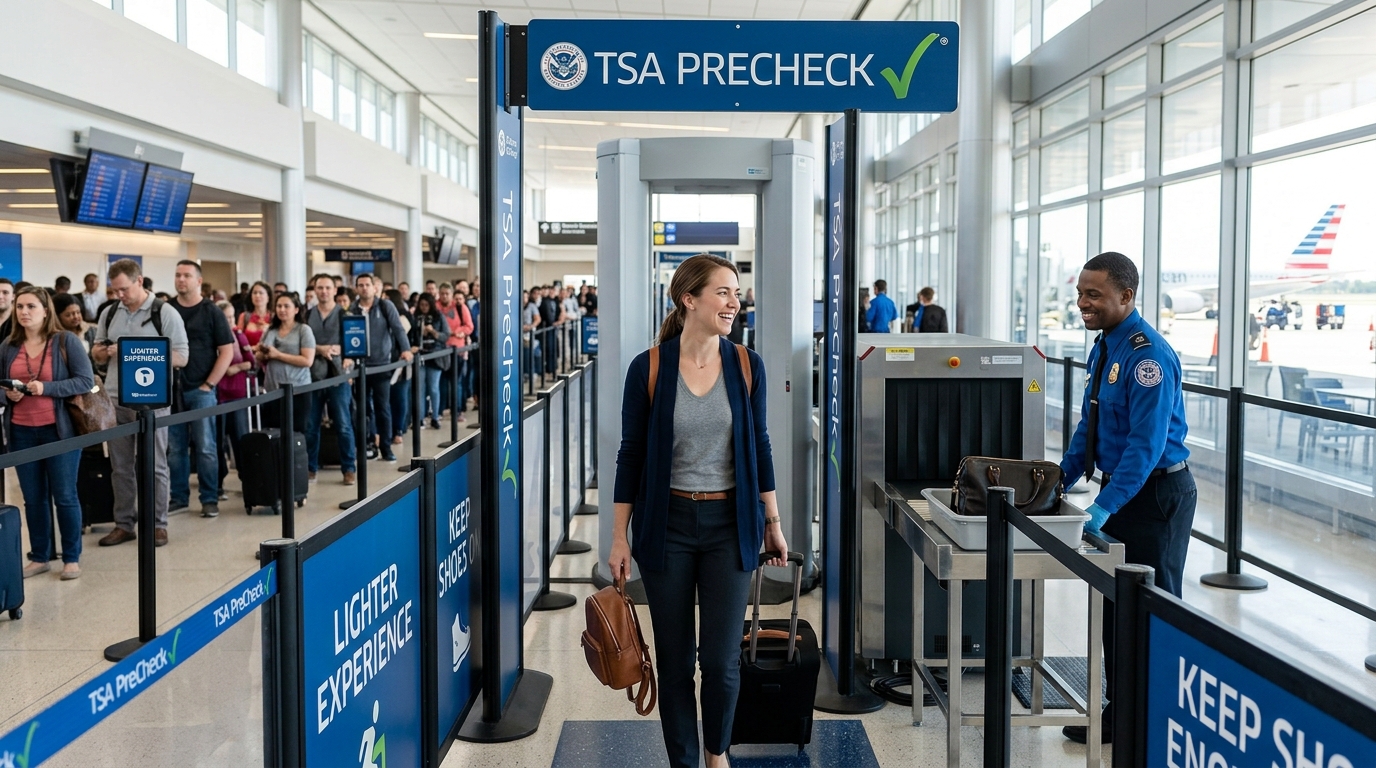
PreCheck members use a dedicated lane at more than 200 U.S. airports. You keep your shoes on, leave your 3-1-1 liquids bag inside your carry-on, and don’t unpack your laptop. Children 12 and under can walk through with an enrolled adult, and travelers 75 and older can use PreCheck lanes even without membership at many airports.
The TSA says 99% of PreCheck passengers wait under 10 minutes in line, with an average of about 5 minutes. Standard lanes averaged roughly 24 minutes over the same period in several TSA reports. That 19-minute gap is the whole pitch. On a Monday morning at Chicago O’Hare or Atlanta Hartsfield-Jackson, it can feel much wider.
One catch people miss: PreCheck isn’t guaranteed. The TSA reserves the right to randomize screening, and a small share of PreCheck passengers still get sent to standard lanes. In practice, that happens on maybe 1 in 20 flights in my own experience, usually with no explanation.
Who Qualifies and Who Doesn’t
U.S. citizens and lawful permanent residents can apply. So can citizens of a short list of partner countries, including the United Kingdom, Canada, Australia, New Zealand, and Mexico, though the process differs slightly. You need a clean enough record to pass a fingerprint-based background check through the FBI and TSA watchlists.
Certain convictions disqualify you outright. That includes espionage, terrorism, and treason charges, plus some serious violent crimes within the past seven years. Minor offenses from decades ago usually don’t sink an application, but the TSA makes the final call and doesn’t publish a full list.
How to Apply
- Fill out the online application at the TSA’s enrollment site. It takes about 5 minutes and asks for basic biographical data.
- Pay the $78 fee. Some credit cards, including certain Chase Sapphire and Capital One Venture products, reimburse it.
- Book an in-person appointment at one of roughly 600 enrollment centers, many inside Staples or IdentoGO offices.
- Show up with your passport or birth certificate plus a government ID. The visit takes 10 minutes: fingerprints, photo, done.
- Wait. Most approvals arrive in 3 to 5 days. Some take up to 60.
Once approved, you get a Known Traveler Number. You must enter it in the frequent flyer field every time you book, or PreCheck won’t print on your boarding pass. That’s the single most common reason people think the program failed them.
The Real Math on Whether It’s Worth It
If you fly 4 or more round trips a year, PreCheck usually pays for itself in saved time alone. Assume you save 15 minutes per trip through security, both directions. Eight trips equals 8 hours saved over five years for $78. That’s under $10 an hour of your time, which sounds weak until you’re sprinting to a gate at Denver International with 12 minutes to spare.
The calculus changes on a few factors:
- Your home airport. Small regional airports like Bozeman or Savannah often have 5-minute standard lines anyway. PreCheck buys you almost nothing there.
- Your travel style. If you check bags and arrive 90 minutes early anyway, the time savings matter less.
- Your credit card. Dozens of travel cards cover the fee, so the true cost is $0 for many people.
- International travel. PreCheck doesn’t help you coming back into the U.S. That’s Global Entry’s job.
Global Entry is the bigger sibling. It costs $120 for five years, includes PreCheck benefits, and gets you through customs in minutes via automated kiosks. If you travel abroad even once every couple of years, Global Entry is the better buy. The catch is a longer wait for conditional approval, sometimes 6 to 12 months, and an in-person interview on return to the U.S.
What About CLEAR?
CLEAR is a private service, not a government program. It costs $199 a year and uses biometric kiosks to skip the ID-check portion of the line. It stacks with PreCheck rather than replacing it. CLEAR at $199 annually is a much harder sell than PreCheck at $78 for five years, and it’s only available at about 55 airports.
Common Complaints and How to Fix Them
The most frequent gripe is a missing PreCheck stamp on the boarding pass. Nine times out of ten, the Known Traveler Number wasn’t saved to the reservation. Fix it by calling the airline or updating your frequent flyer profile, then re-check in.
Second gripe: renewal surprise. PreCheck memberships last five years, and the TSA doesn’t send loud reminders. You can renew online for $70, a $8 discount, and most people qualify without another in-person visit. Set a calendar reminder for month 55.
Third gripe: family logistics. Only travelers 12 and under skip through with an enrolled adult. A 13-year-old needs their own membership, which costs another $78. Families of four flying twice a year often find the math doesn’t work unless a credit card is footing the bill.
One more thing worth knowing: the TSA has been testing self-service screening pods at Las Vegas Harry Reid International since 2024. If those spread, the standard line could get faster, which would narrow PreCheck’s edge. For now, though, the gap is real.
Conclusion
TSA PreCheck is worth it if you fly at least 4 times a year through busy airports and can get the fee covered by a credit card. At $78 for five years, the downside is small and the upside is a security line that moves in 5 minutes instead of 25. If you fly twice a year out of a quiet regional airport, skip it and put the money toward a checked bag.
Q: How much does TSA PreCheck cost?
New enrollment costs $78 and lasts five years, which works out to $15.60 annually. Online renewal drops to $70. Many travel credit cards, including several Chase Sapphire and Capital One Venture products, reimburse the fee as a statement credit, so the real cost can be zero if you hold the right card.
Q: How long does TSA PreCheck approval take?
Most applicants get approved in 3 to 5 days after their in-person enrollment visit. Some cases stretch to 60 days if the background check flags something. You’ll get a Known Traveler Number by email once approved, and you need to enter it on every booking or PreCheck won’t appear on your boarding pass.
Q: Is TSA PreCheck the same as Global Entry?
No. Global Entry costs $120 for five years, includes all PreCheck benefits, and speeds you through U.S. customs with automated kiosks. PreCheck only covers domestic security screening. If you travel internationally even occasionally, Global Entry is usually the better value, though approval can take 6 to 12 months.
Q: Can my family use TSA PreCheck with me?
Children 12 and under can accompany an enrolled adult through PreCheck lanes without their own membership. Anyone 13 or older needs a separate enrollment, which costs another $78 each. Travelers 75 and older can often use PreCheck lanes at many airports even without membership, though policies vary by location.
Q: Why didn’t TSA PreCheck show on my boarding pass?
Almost always because your Known Traveler Number wasn’t saved to the reservation. Add it to your airline frequent flyer profile permanently, or enter it manually at booking. If it’s still missing, call the airline and ask them to reissue the boarding pass. Random screening also removes PreCheck for a small share of passengers.