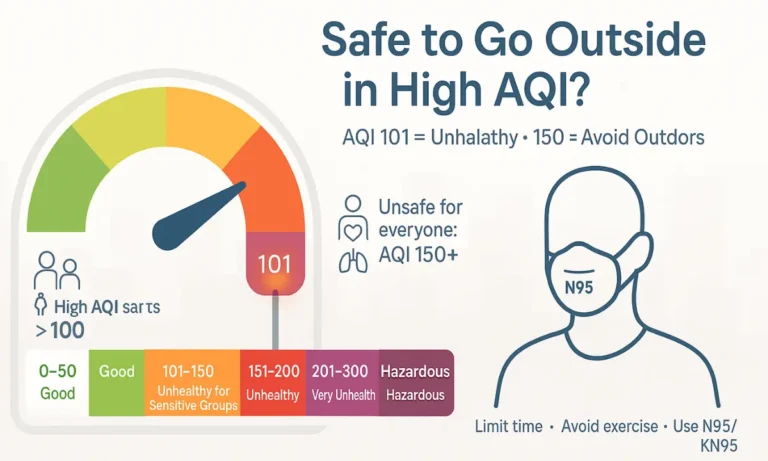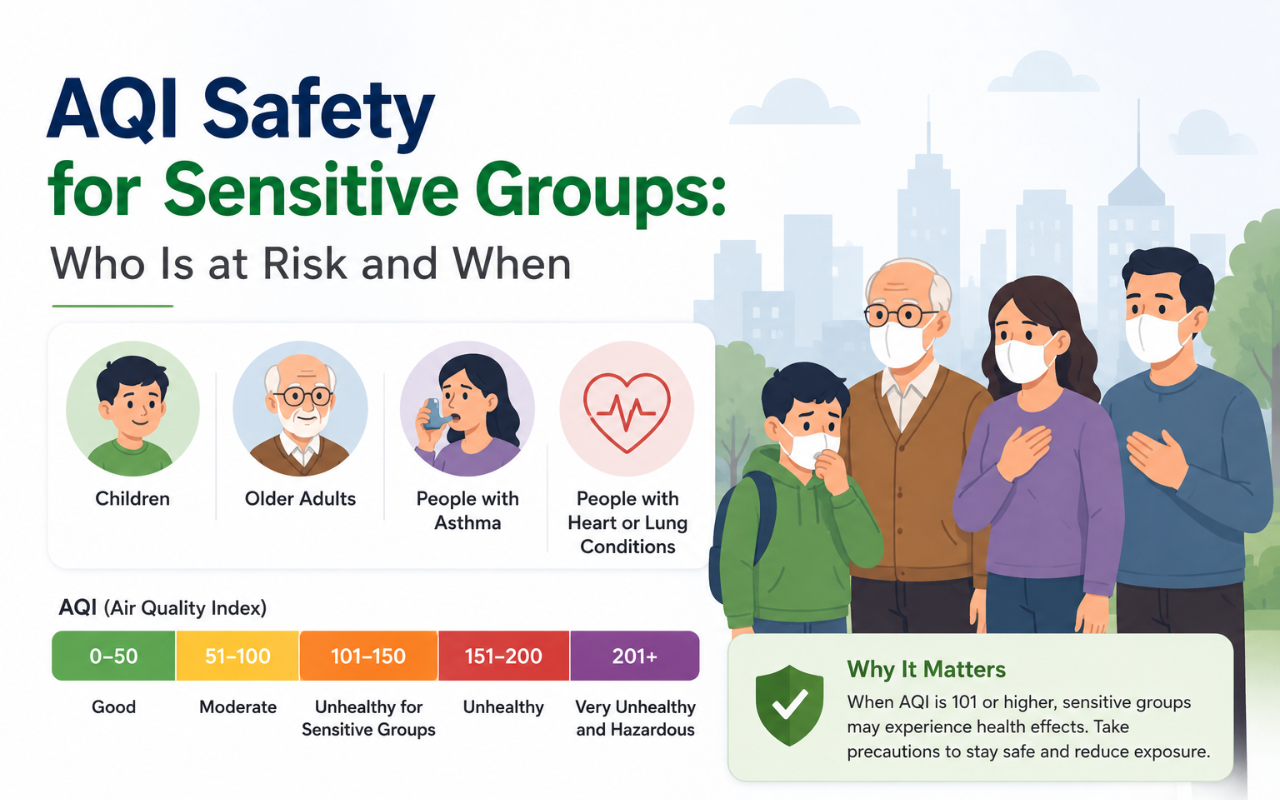
The EPA labels AQI 101 to 150 “Unhealthy for Sensitive Groups,” but that phrase covers a wide range of people with very different risk profiles. A child with mild asthma, a 75-year-old with COPD, a pregnant woman, and someone undergoing chemotherapy all qualify as sensitive but face different risks at different AQI levels. This guide breaks down each sensitive population with specific thresholds and practical steps, rather than treating everyone in the category the same way.
What “Sensitive Groups” Actually Means
The EPA uses the sensitive groups category to flag people whose airways, cardiovascular systems, or immune defenses respond to air pollution at lower concentrations than a typical healthy adult. According to the EPA’s AQI technical documentation, sensitive group status is not binary. The category spans people with mild intermittent conditions all the way to those with severe chronic disease, and the appropriate action threshold differs significantly across that range. *(Verify current EPA sensitive group definitions at epa.gov before publishing.)*
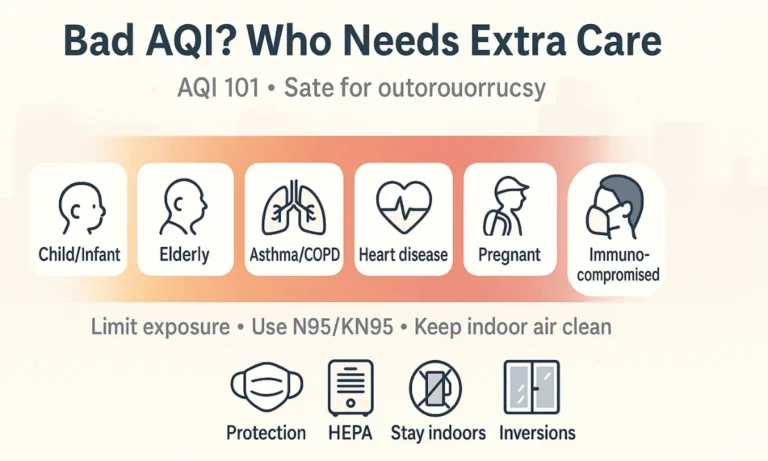
Six populations consistently appear in EPA and WHO guidance as requiring extra caution around air quality: children, older adults, people with asthma or COPD, people with cardiovascular disease, pregnant women, and people with diabetes. Each group is sensitive for different physiological reasons, which means generic advice like “stay indoors above AQI 100” gives them less actionable guidance than they need. The sections below address each group specifically.
Children: Higher Exposure Risk at Every AQI Level
Children are not just small adults when it comes to air pollution exposure. They breathe more air relative to their body weight than adults, spend more time outdoors in active play, and have airways that are still developing through adolescence. A child breathing at a running pace takes in roughly twice the air per kilogram of body weight compared to a sedentary adult. This means a given PM2.5 concentration delivers proportionally more particles to a child’s lungs.
Action Thresholds for Children
For children without existing respiratory conditions, outdoor activity can generally continue at AQI 51 to 100, but vigorous extended play should be shortened. At AQI 101 and above, the American Academy of Pediatrics recommends limiting outdoor exertion and considering indoor alternatives for recess or sports practice. *(Verify current AAP guidance at aap.org before publishing.)* For children with asthma, the threshold drops: AQI 51 to 100 already warrants a check of the PM2.5 sub-index before unstructured outdoor play, and AQI above 100 means keeping vigorous exercise indoors entirely.
School and Childcare Settings
The EPA’s Air Quality Flag Program provides schools with a color-coded flag system that matches the AQI scale, giving teachers and administrators a visible daily signal about whether outdoor activity should proceed, be modified, or move indoors. Schools in states with active wildfire seasons increasingly use hourly AQI data rather than daily forecasts to make recess decisions, since conditions can deteriorate rapidly between the morning forecast and midday.
Older Adults: Cardiovascular Risk Is the Primary Concern
For adults over 65, the dominant air quality risk is cardiovascular rather than respiratory. PM2.5 particles that reach the lung’s air sacs trigger a systemic inflammatory response, increasing blood viscosity and the risk of clot formation. Research published in the New England Journal of Medicine linked short-term PM2.5 increases to measurable spikes in hospital admissions for heart attacks and strokes in adults over 65, with effects visible at concentrations well within the Moderate AQI range. *(Verify current research at nejm.org or pubmed.gov before publishing.)*
- AQI 51 to 100: Limit prolonged outdoor exertion, particularly on warm days when ozone combines with PM2.5. Morning walks in lower-traffic areas carry less risk than midday activity near busy roads.
- AQI 101 to 150: Move vigorous activity indoors. Keep windows closed during peak pollution hours and run a HEPA purifier if available.
- AQI 151 and above: Stay indoors. Avoid physical exertion even indoors if the building has poor ventilation or no filtration. People on blood thinners or with recent cardiac events should contact their doctor if they experience unusual shortness of breath or chest tightness on heavy pollution days.
People with Asthma and COPD
Asthma and COPD represent the largest and most studied sensitive groups in air quality research. Both conditions involve chronic airway inflammation that makes the bronchial tubes hyperreactive to irritants. PM2.5 and ozone are among the most potent triggers for both conditions, and their effects are dose-dependent: the higher the concentration and the longer the exposure, the greater the inflammatory response.
Asthma-Specific Thresholds
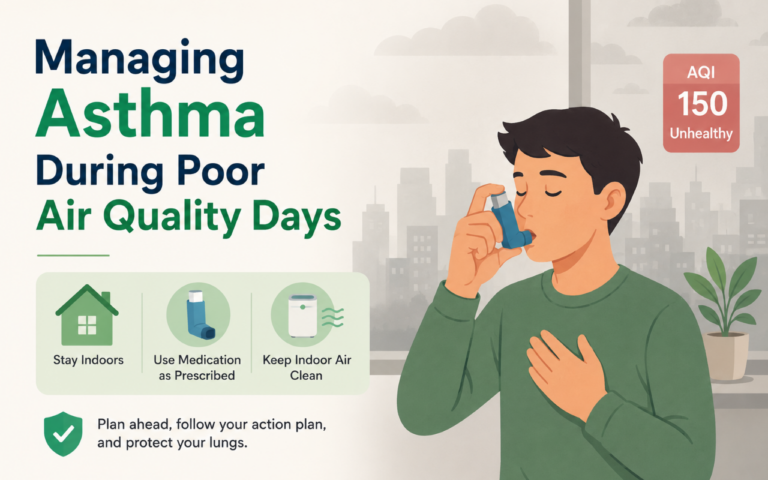
For people with moderate-to-severe asthma, the action threshold sits at AQI 51 to 100 rather than the general public’s 101. The PM2.5 sub-index on AirNow.gov is the more relevant number than composite AQI, since PM2.5 drives asthma exacerbations more reliably than most other pollutants. On days when the PM2.5 sub-index exceeds 75, people with asthma should carry a rescue inhaler even for short outdoor errands. See managing asthma during poor air quality days for a full medication and action plan protocol.
COPD-Specific Thresholds
COPD involves permanent structural damage to the airways and air sacs, which means the lungs have less reserve capacity to absorb a pollution-related insult. The Global Initiative for Chronic Obstructive Lung Disease (GOLD) guidelines identify air pollution as a primary exacerbation trigger and recommend that people with COPD treat AQI 100 as an indoor day regardless of symptom status. *(Verify current GOLD guidelines at goldcopd.org before publishing.)* On days when PM2.5 exceeds AQI 150, COPD patients on supplemental oxygen should confirm with their care team whether oxygen flow rates should be adjusted temporarily.
People with Cardiovascular Disease
Heart disease patients face risks from air pollution through two mechanisms operating simultaneously. PM2.5 causes direct vascular inflammation, and ozone causes reflex changes in heart rate variability. Together, these effects increase the risk of arrhythmia, acute coronary events, and stroke. The American Heart Association’s scientific statement on air pollution and cardiovascular disease notes that the cardiovascular risk from PM2.5 exposure begins at concentrations below the current US annual standard, meaning even “Good” AQI days carry some residual risk for people with severe cardiac history. *(Verify current AHA position statement at heart.org before publishing.)*
| AQI Range | Recommendation for Cardiac Patients |
|---|---|
| 0 to 50 | Normal activity. No modifications needed. |
| 51 to 100 | Limit high-intensity outdoor exercise. Morning activity in low-traffic areas is lower risk than afternoon near busy roads. |
| 101 to 150 | Move all vigorous exercise indoors. Avoid peak traffic and ozone hours outdoors. |
| 151 and above | Stay indoors. Any unusual chest pain, palpitations, or shortness of breath during high-pollution days warrants prompt medical attention. |
Pregnant Women
Pregnancy creates sensitivity to air pollution through two separate pathways: the mother’s increased respiratory demand (breathing volume rises by roughly 20 percent during pregnancy) and the developing fetus’s vulnerability to inflammation-mediated effects. Research from the Harvard T.H. Chan School of Public Health linked PM2.5 exposure during the third trimester specifically to increased rates of preterm birth and low birth weight. *(Verify current research at hsph.harvard.edu before publishing.)*
Practical guidance for pregnant women follows the same AQI thresholds as other sensitive groups, with one additional consideration: indoor air quality deserves extra attention throughout pregnancy, not just on high-AQI days. Gas stoves, which emit nitrogen dioxide and fine particles during cooking, are a consistent source of indoor PM2.5 regardless of outdoor air quality. Using the stovetop exhaust fan consistently, ventilating during cooking on clean outdoor air days, and considering an electric induction cooktop if replacing appliances are all steps that reduce cumulative exposure during pregnancy.
People with Diabetes
Diabetes is included in sensitive group guidance because of the established link between PM2.5 exposure and insulin resistance. Short-term PM2.5 elevation triggers systemic inflammation that temporarily disrupts glucose metabolism, making blood sugar harder to control on high-pollution days. People with both diabetes and cardiovascular disease face compounded risk, since both conditions amplify each other’s vulnerability to PM2.5 effects.
The practical action threshold for people with diabetes mirrors the general sensitive group guidance: limit prolonged vigorous outdoor activity above AQI 100, and pay attention to blood glucose patterns on consecutive high-AQI days. If blood sugar becomes harder to control during a pollution event without a dietary or activity explanation, consult your endocrinologist about temporary adjustments. This is not a widely publicized connection, and many diabetes patients are unaware that air quality can affect glucose stability.
Checking AQI as a Sensitive Group: What to Look At
General AQI checks miss the detail that sensitive groups need. These steps take less than two minutes and provide a much more accurate picture of the actual risk on a given day.
- Check the hourly reading, not the daily forecast: AQI shifts significantly throughout the day. The morning forecast on AirNow.gov can differ substantially from the actual midday reading, especially during ozone season or wildfire events. Check the current hour before outdoor activity, not the previous night’s forecast.
- Check the PM2.5 sub-index specifically: Go to AirNow.gov and click through to the pollutant breakdown. The composite AQI can look acceptable while the PM2.5 sub-index is already in the orange range. For people with asthma, COPD, cardiovascular disease, or pregnancy, PM2.5 is the number that matters most.
- Check the ozone sub-index if you exercise outdoors: Ozone causes bronchoconstriction during physical exertion. If the ozone sub-index is in the yellow or orange range and you plan vigorous outdoor activity, shift timing to before 11am or after 7pm when ozone levels are typically lower.
- Set up AirNow text alerts: AirNow.gov allows free air quality alerts by zip code. Setting an alert for AQI 100 gives you a same-day notification to adjust plans before the air quality deteriorates rather than after it already has.
- Know your building’s infiltration rate: Older homes and buildings let outdoor PM2.5 indoors faster than newer, more airtight construction. If you live in an older building, indoor air quality on high-pollution days may warrant a HEPA purifier even if you are staying inside. See what is considered a good AQI for a full guide to the scale and what each number means.
Conclusion
Sensitive groups span a wide range of conditions and risk levels, and treating them as a single category leads to advice that is either too cautious for some or not cautious enough for others. Children, older adults with cardiac history, people with moderate-to-severe asthma or COPD, and pregnant women all warrant tighter personal thresholds than the general AQI guidance suggests. The most useful step any sensitive group member can take is building a written action plan with their doctor that translates general AQI thresholds into specific personal steps, rather than relying on general public guidance that was not designed for their situation. If you have a chronic condition affected by air quality, discuss your specific thresholds and medication protocols with your healthcare provider before the next poor air quality event, not during it.
Frequently Asked Questions
Who is considered a sensitive group for air quality?
The EPA defines sensitive groups as people whose health is more severely affected by air pollution than the general public. This includes children, adults over 65, people with asthma or COPD, people with cardiovascular disease, pregnant women, and people with diabetes. Each group is sensitive for different physiological reasons and may have different personal action thresholds within the broader category.
What AQI is safe for someone with COPD?
For people with COPD, the Global Initiative for Chronic Obstructive Lung Disease recommends treating AQI 100 as an indoor day regardless of whether symptoms are present. Below AQI 100, moderate outdoor activity is generally acceptable, but vigorous exertion should be limited. On days above AQI 150, people with severe COPD should avoid outdoor exposure entirely and ensure indoor air quality is actively managed with HEPA filtration.
Is AQI 75 safe for a child with asthma?
AQI 75 falls in the Moderate range and is generally acceptable for children with mild, well-controlled asthma doing moderate-intensity activity. Vigorous extended play should be shortened. Check the PM2.5 sub-index on AirNow.gov rather than the composite AQI for a more accurate picture. Always carry the child’s rescue inhaler on any day above AQI 50, and consult their pediatrician for personal thresholds specific to their asthma severity.
Can air quality affect blood sugar in people with diabetes?
Research links short-term PM2.5 elevation to increased insulin resistance and harder-to-control blood sugar. The mechanism involves systemic inflammation triggered by PM2.5 that disrupts glucose metabolism temporarily. People with both diabetes and cardiovascular disease face compounded risk. If blood sugar becomes unusually difficult to control during a multi-day pollution event without a dietary explanation, consult your endocrinologist about temporary adjustments.
Should pregnant women stay indoors when AQI is high?
Pregnant women are considered a sensitive group due to increased respiratory demand and fetal vulnerability to inflammation-related effects. The same thresholds that apply to other sensitive groups apply here: limit vigorous outdoor activity above AQI 100 and stay indoors above AQI 150. Indoor air quality also deserves attention throughout pregnancy regardless of outdoor AQI, particularly around gas stoves and other indoor combustion sources.