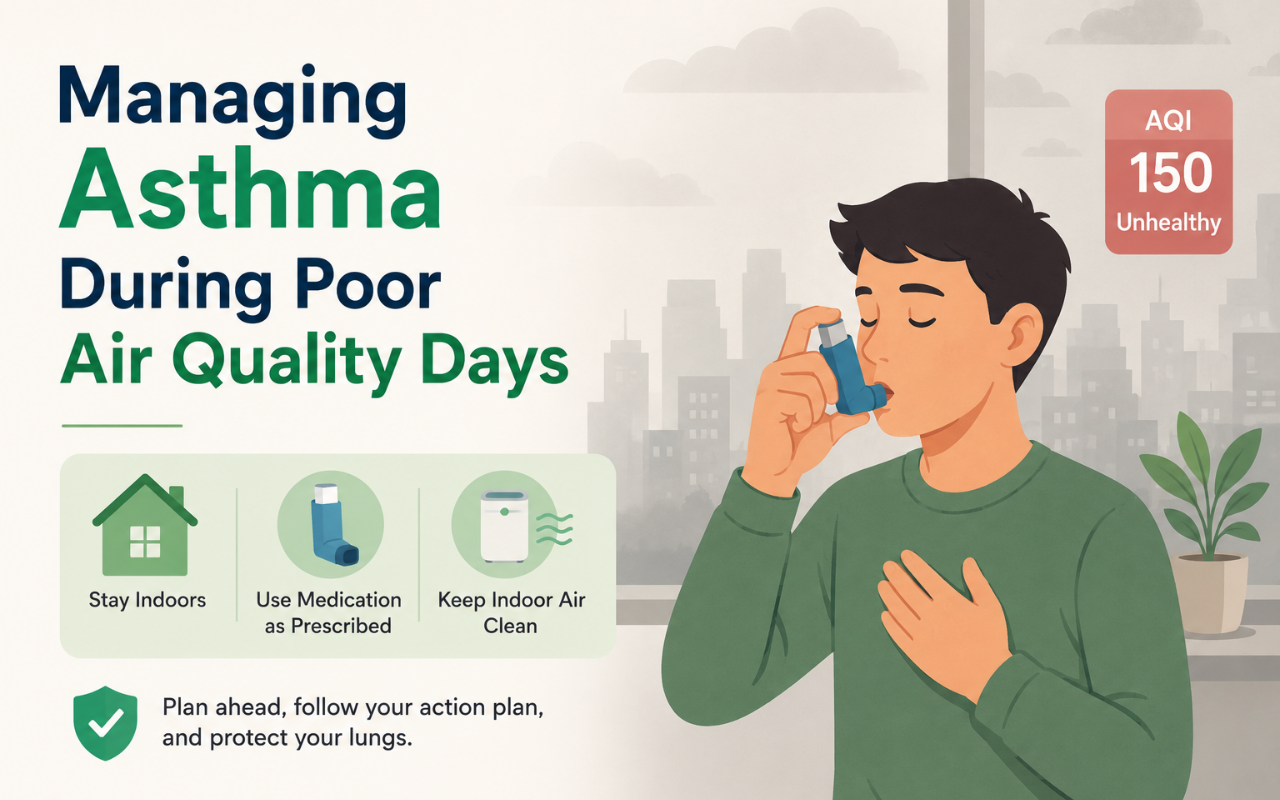
Poor air quality days are among the most common asthma triggers, and the standard advice to “stay indoors” leaves out most of what actually matters. Knowing which pollutant to track, how to adjust your medications proactively, and how to keep indoor air from making things worse gives you real control on high-AQI days. This guide covers the specific steps that respiratory clinicians recommend, not just the generic precautions.
Why Air Pollution Triggers Asthma
Asthma inflames and narrows the airways, making them hypersensitive to irritants. Airborne pollutants, particularly PM2.5 and ground-level ozone, trigger that inflammation directly. PM2.5 particles are small enough to bypass the nose and throat entirely and reach deep into the bronchial tubes, where they cause oxidative stress and worsen existing airway inflammation. The American Lung Association has documented that even short-term PM2.5 exposure lasting a few hours can trigger asthma attacks in people with moderate-to-severe asthma.
Ground-level ozone works differently. It reacts with airway tissue on contact, causing immediate bronchoconstriction during exertion when breathing rate is high. This is why asthma symptoms often worsen on hot, sunny afternoons in cities, even when PM2.5 levels are relatively low. Understanding which pollutant is elevated on a given day tells you whether the risk is highest during physical activity (ozone) or present even at rest indoors with windows open (PM2.5).
The Right Number to Check: PM2.5, Not Just Overall AQI
Most weather apps display a composite AQI that reflects the worst-performing pollutant across all six categories. For asthma management, this number is a starting point, not the whole picture.
Why the PM2.5 Sub-Index Matters More
The composite AQI can show a Moderate reading of 75 driven entirely by ozone, while PM2.5 stays at 20. For someone with asthma, that day carries a very different risk profile than an AQI of 75 driven by PM2.5 at 35 micrograms per cubic meter. AirNow.gov breaks down AQI by individual pollutant, which takes about 10 seconds to check. The EPA’s recommended PM2.5 thresholds for sensitive groups put the action point at an AQI sub-index of 101 for people with asthma, below the 150 threshold that applies to healthy adults.
When Ozone Is the Primary Driver
Ground-level ozone peaks between 12pm and 6pm on warm, sunny days, particularly in urban areas with heavy traffic. On ozone-dominant days, the morning AQI can look acceptable while the afternoon reading spikes into the orange or red range. People with asthma should check the hourly AQI forecast, not just the morning reading, before scheduling any outdoor activity. The EPA’s Air Quality Flag Program used in many schools uses this hourly data to decide whether outdoor recess should proceed.
Tracking Both Together
The most reliable habit is checking both the PM2.5 sub-index and the ozone sub-index each morning during warm weather months and during any wildfire smoke event. AirNow.gov shows both in the same view. During wildfire smoke events, PM2.5 can spike to hazardous levels within hours regardless of what the morning forecast showed, so re-checking mid-day is worthwhile on smoke-risk days.
AQI Action Thresholds Specific to Asthma
General AQI guidance is written for the broader public. People with asthma need tighter thresholds because their airways react at lower pollution concentrations than a healthy adult would.
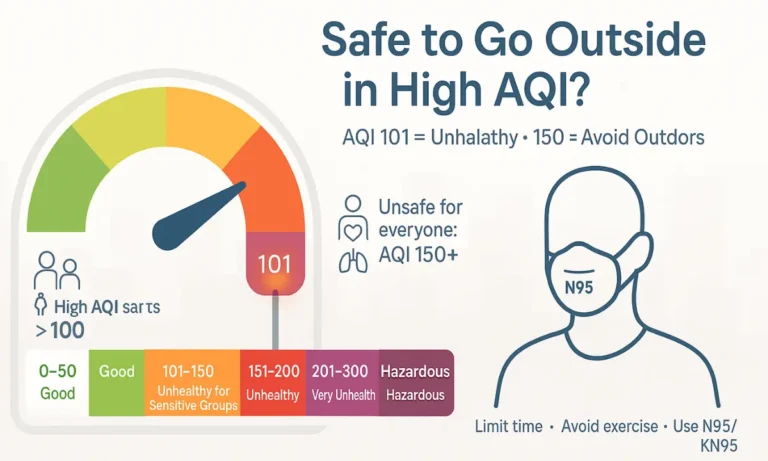
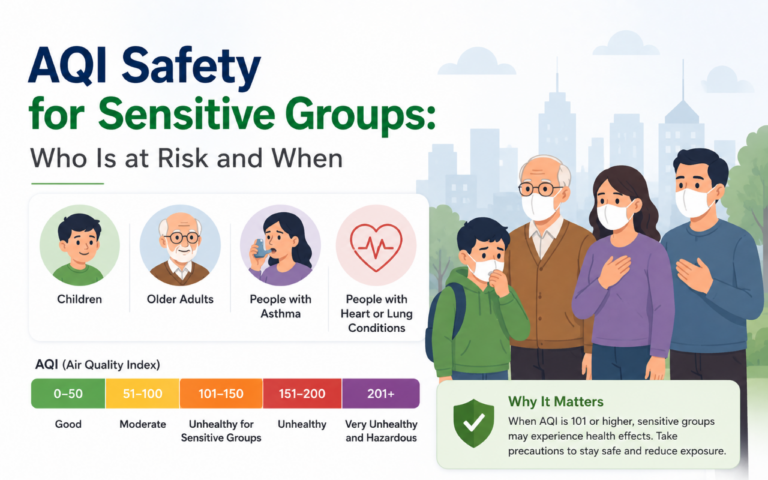
- AQI 0 to 50 (Good): All outdoor activities are safe. No modifications needed to exercise, outdoor time, or windows.
- AQI 51 to 100 (Moderate): Limit prolonged vigorous outdoor exertion. A 20-minute walk is lower risk than a 60-minute run. Keep rescue inhaler accessible. Check the PM2.5 sub-index specifically before opening windows.
- AQI 101 to 150 (Unhealthy for Sensitive Groups): This range is the key action threshold for people with asthma. Move vigorous exercise indoors. Avoid peak ozone hours (12pm to 6pm) for any outdoor activity. If your asthma action plan includes a step-up protocol, consider initiating it proactively on days forecast to reach this range.
- AQI 151 to 200 (Unhealthy): Stay indoors. Close windows and doors. Run HEPA air purifiers in the rooms you use most. Avoid using gas stoves, burning candles, or vacuuming, as these add indoor PM2.5 on top of whatever is infiltrating from outside.
- AQI 201 and above (Very Unhealthy or Hazardous): Treat this as a medical precaution day. Follow your written asthma action plan. Keep emergency contacts and your pulmonologist’s number accessible. If symptoms escalate despite medication, seek medical attention promptly.
These thresholds are general guidelines based on EPA sensitive group recommendations. Your personal thresholds may differ based on your asthma severity, current control level, and medications. Work through these with your doctor to build them into a written action plan.
Medication Management on High-AQI Days
Waiting for symptoms to start before using a rescue inhaler is a reactive approach. On days forecast to reach AQI 100 or above, a proactive medication strategy reduces the severity of any reaction if exposure occurs.
- Pre-treatment before unavoidable outdoor exposure: If you must go outside during a high-AQI period, many pulmonologists recommend using a short-acting bronchodilator 15 to 30 minutes beforehand on days when the AQI is forecast to reach the orange range or above. Confirm this approach with your own doctor, as pre-treatment protocols vary by individual asthma severity.
- Controller medication consistency: Skipping inhaled corticosteroid doses during low-symptom periods reduces baseline airway protection exactly when you may need it most. High-pollution days place higher demands on airway stability. Consistent daily use of controller medications, as prescribed, provides the foundation that makes rescue medications more effective when needed.
- Rescue inhaler accessibility: On any day with AQI 101 or above, keep your rescue inhaler with you regardless of your indoor plans. Pollution infiltrates indoor spaces, particularly in older buildings with less airtight construction. Having to search for an inhaler during an attack adds stress that worsens bronchoconstriction.
- Peak flow monitoring: People with moderate-to-severe asthma who use a peak flow meter have a concrete early warning system. Checking peak flow each morning on high-AQI days lets you catch a downward trend before symptoms become significant. A reading in your personal yellow or red zone is a prompt to follow your action plan regardless of how you feel in that moment.
Managing Indoor Air Quality When Outside Air Is Poor
Staying indoors only helps if indoor air quality is actually better than what is outside. On heavy pollution days, indoor PM2.5 can reach 30 to 50 percent of outdoor levels within a few hours in a typical home, even with windows closed. A few targeted steps make a real difference.
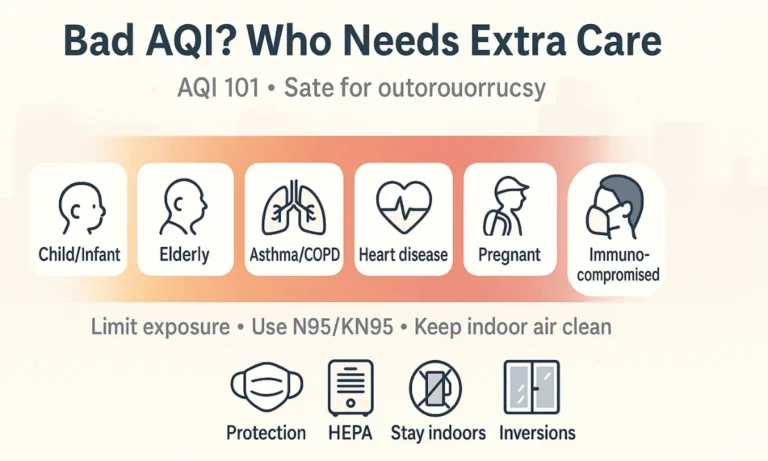
- HEPA air purifiers in primary rooms: A HEPA-rated purifier in the bedroom and main living area significantly reduces indoor PM2.5 on high-pollution days. Look for units rated for the room’s square footage. The Asthma and Allergy Foundation of America (AAFA) recommends HEPA filtration as a first-line intervention for reducing indoor allergen and pollution exposure.
- Avoid adding indoor pollution sources: Gas stoves, candles, incense, and aerosol sprays all generate indoor PM2.5. On days when you are keeping windows closed to block outdoor pollution, avoid these sources entirely. Use the stovetop exhaust fan when cooking is unavoidable, and choose electric alternatives where possible.
- Seal gaps on the worst days: On hazardous AQI days (301 and above), weatherstripping gaps under doors and around older windows reduces infiltration. This is a temporary measure for extreme events, not a daily practice.
- Avoid vacuuming on high-pollution days: Standard vacuuming redistributes fine particles into the air even with a filter bag. On days when indoor particle levels are already elevated from outdoor infiltration, postpone vacuuming or use a vacuum with a HEPA filter.
Building a Written Asthma Action Plan for Air Quality Events
A written asthma action plan turns general guidance into personal, actionable steps. The National Heart, Lung, and Blood Institute (NHLBI) recommends that every person with persistent asthma have a written plan reviewed with their doctor at least annually. For air quality specifically, the plan should include the following:
- Your personal AQI alert threshold: The AQI level at which you start your step-up protocol. For many people with moderate asthma this is AQI 100. For severe asthma it may be lower.
- Specific medication adjustments by AQI zone: Which medications to add or increase at each threshold, confirmed with your pulmonologist rather than based on general advice.
- Outdoor activity restrictions by AQI level: Concrete rules, not vague guidance. “No outdoor exercise above AQI 100” is actionable. “Limit outdoor activity when air quality is poor” is not.
- Indoor air quality checklist: A short list of steps to take when AQI exceeds your threshold: purifier on, windows closed, no candles, no gas stove without exhaust fan.
- Escalation criteria: Specific symptoms or peak flow readings that mean it is time to call your doctor or go to urgent care, regardless of what medications you have already taken.
Reviewing and updating this plan each spring before ozone season, and again in late summer before wildfire season in fire-prone regions, keeps it relevant to current conditions and your current medication regimen. Download a template from the NHLBI or AAFA and bring it to your next appointment. See what is considered a good AQI for a full breakdown of how the scale works.
Conclusion
Managing asthma on poor air quality days comes down to tracking the right number (PM2.5 sub-index, not just composite AQI), acting before symptoms start rather than waiting for them, and controlling indoor air as actively as outdoor exposure. The steps above are grounded in EPA sensitive group thresholds and standard respiratory care recommendations, but individual asthma varies significantly. Work with your pulmonologist to translate this general guidance into a personal written action plan with thresholds and medication steps specific to your situation. For questions about specific medications or symptom escalation, contact your doctor rather than relying on general online guidance. Learn more about AQI levels and what each color means to sharpen your daily monitoring habits.
Frequently Asked Questions
What AQI is dangerous for asthma?
For people with asthma, AQI 101 (the start of the orange Unhealthy for Sensitive Groups range) is the key action threshold. At this level, vigorous outdoor exercise should move indoors and a step-up protocol may be appropriate depending on your written action plan. Healthy adults typically don’t face meaningful risk until AQI exceeds 150, but that higher threshold does not apply to people with asthma.
Does air pollution make asthma worse long-term?
Research consistently links repeated PM2.5 exposure to accelerated lung function decline in people with asthma over time. Short-term exposure triggers acute attacks. Chronic exposure to elevated pollution levels is associated with increased airway inflammation, higher rescue inhaler use, and more frequent exacerbations requiring medical care. Consistent use of controller medications and air quality management reduces cumulative exposure.
Should I use my inhaler before going outside on a high-AQI day?
Some pulmonologists recommend pre-treatment with a short-acting bronchodilator 15 to 30 minutes before unavoidable outdoor exposure on orange or red AQI days. This is not a universal recommendation and depends on your asthma severity and current medications. Confirm the approach with your own doctor before building it into your routine, as pre-treatment protocols are individualized.
Do air purifiers actually help with asthma during high-AQI days?
Yes, HEPA air purifiers meaningfully reduce indoor PM2.5 on high-pollution days. The Asthma and Allergy Foundation of America recommends HEPA filtration as a first-line intervention for reducing indoor pollution and allergen exposure. Effectiveness depends on using a unit sized appropriately for the room and running it continuously on poor air quality days, not just during symptoms.
Is it safe to exercise outdoors if I have asthma and the AQI is 80?
AQI 80 falls in the Moderate range and is generally considered acceptable for people with mild, well-controlled asthma doing moderate-intensity exercise. Those with moderate-to-severe asthma or poorly controlled symptoms should keep sessions shorter and lower intensity at this level. Check the PM2.5 sub-index specifically, carry your rescue inhaler, and avoid the 12pm to 6pm ozone window on warm, sunny days.