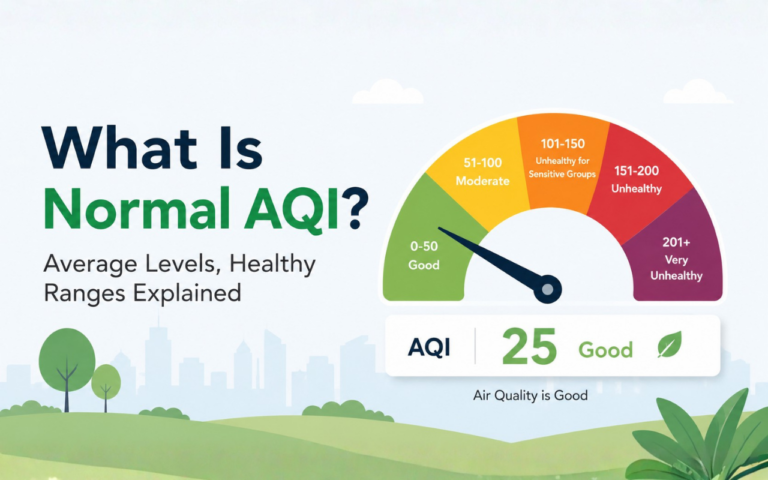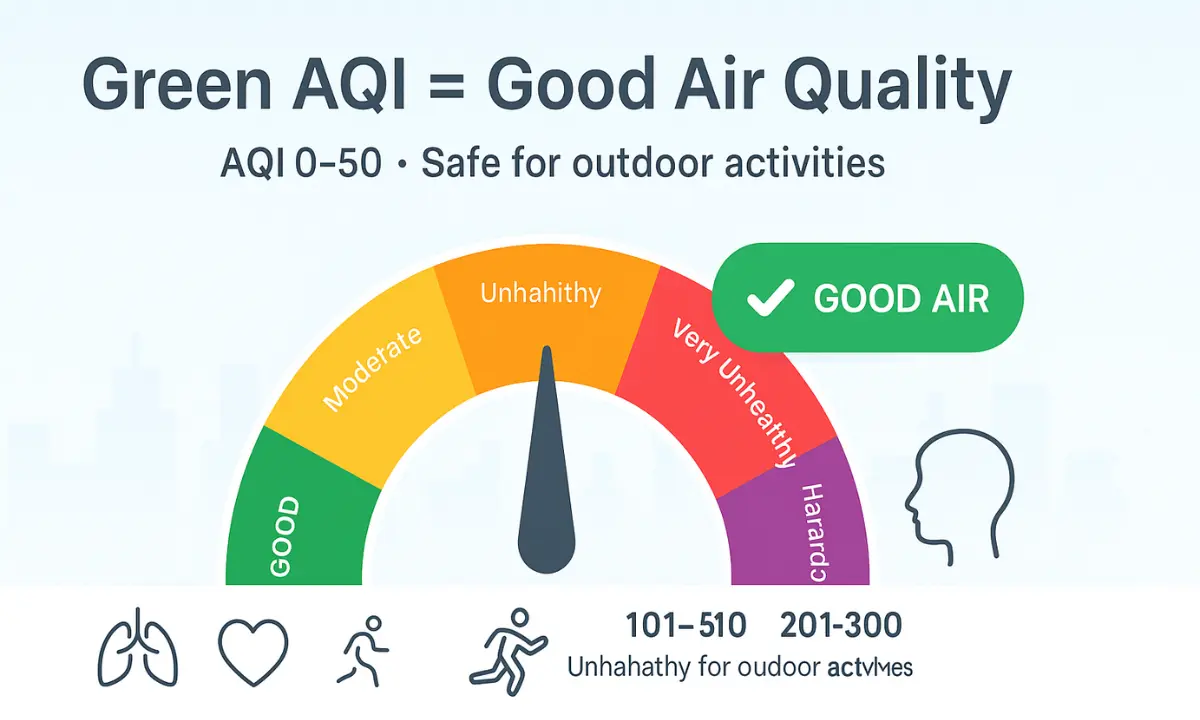
green AQI color means good air quality. It indicates clean, healthy air that is safe for everyone. Green AQI supports normal outdoor activity and indoor ventilation without added health risk. It is the standard for breathable, low-risk air.
Every breath you take delivers oxygen to your body, but it can also carry invisible pollutants that affect your lungs, heart, and long-term health. Modern air pollution is often impossible to detect with human senses. There may be no smoke, no odor, and no immediate discomfort, yet harmful particles may still be present in the air.
This is why AQI colors play such a critical role in daily health decisions. They convert complex scientific measurements into a simple visual system that allows anyone to understand air quality at a glance. When people open a weather or air-quality app and see green, yellow, orange, or red, that color is not just information it is a health signal.
This guide explains:
- What AQI is and why colors are used instead of numbers alone
- Which AQI color represents good air quality, and why
- The health meaning behind each AQI color
- How AQI colors should guide daily outdoor and indoor decisions
- How to maintain safe air quality at home
- Common misunderstandings about AQI colors
To understand AQI colors, it is essential to understand the system behind them.
Understanding the Air Quality Index (AQI)
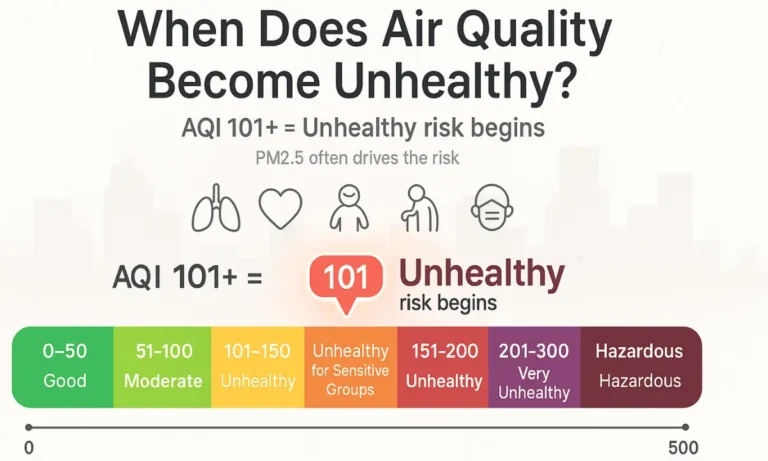
The Air Quality Index (AQI) is a standardized system used by environmental and public-health agencies to communicate how polluted the air is at a given time. AQI values range from 0 to 500 and are based on the concentration of the most harmful pollutant detected, such as fine particulate matter or ozone.
Lower AQI values represent cleaner air with minimal health risk. Higher values indicate increasing pollution levels and greater potential harm to human health. AQI exists as a preventive health tool, designed to warn people before pollution causes widespread illness.
Why AQI Uses Colors Instead of Only Numbers
While numbers provide precision, they are not always intuitive. Colors allow instant recognition and emotional understanding:
- Green signals safety
- Yellow signals caution
- Orange, red, and purple signal increasing danger
Using colors ensures that people of all ages and education levels can quickly understand air-quality conditions and act accordingly. This visual simplicity is what makes AQI colors such an effective public-health communication tool.
The most important and most searched question is straightforward:
The green AQI color means good air quality.
Green AQI Explained in Detail
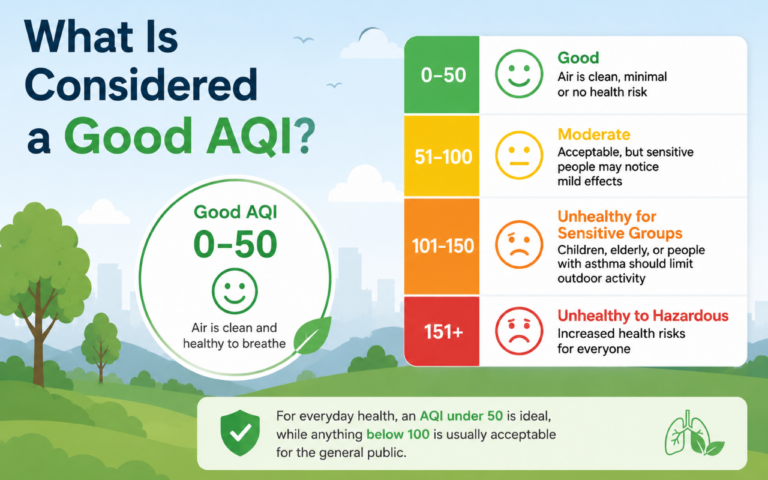
The green AQI category corresponds to an AQI range of 0 to 50. This range indicates that air pollution levels are very low and pose little to no health risk for the general population.
When the AQI color is green:
- Air is considered clean and healthy
- Pollutant levels are well below harmful thresholds
- Outdoor activities are safe for all age groups
- No special precautions are necessary
So, when asking which AQI color means good air quality, the universally accepted answer is green.
Is Green AQI Safe for Everyone?
Yes. Green AQI is considered safe for:
- Children and infants
- Elderly individuals
- Pregnant people
- Individuals with asthma or heart disease
While extremely sensitive individuals may occasionally notice very mild irritation, green AQI represents the lowest practical risk level under normal environmental conditions.
Understanding the full AQI color scale helps place green AQI into its proper context.
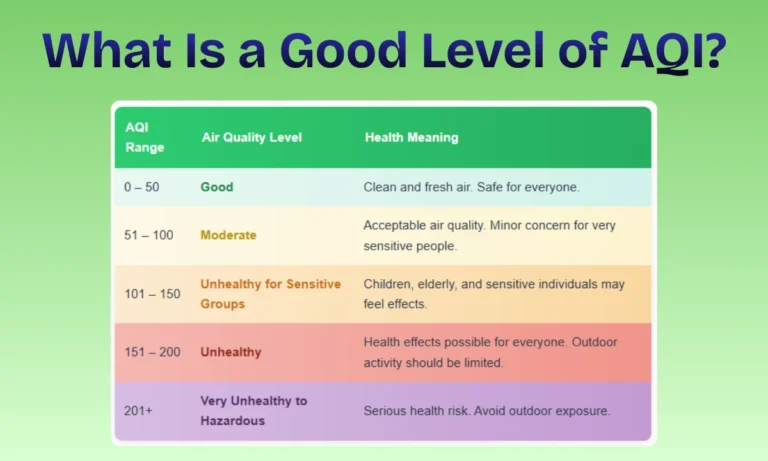
Green Good Air Quality (AQI 0 to 50)
Green indicates ideal air conditions with minimal pollution. Long-term exposure at this level is considered safe for the entire population. Lung function, oxygen exchange, and cardiovascular activity operate without added environmental stress. This category supports normal physical activity and outdoor living. Public-health agencies aim to maintain green AQI as frequently as possible.
Yellow Moderate Air Quality (AQI 51 to 100)
Yellow AQI means air quality is acceptable but no longer optimal. Pollution levels are slightly elevated, though still within regulatory limits. Sensitive individuals may experience mild symptoms after prolonged exposure. Healthy adults are typically unaffected during short outdoor activities. Yellow AQI calls for awareness, not alarm.
Orange Unhealthy for Sensitive Groups (AQI 101 to 150)
Orange AQI marks the first stage where health effects become measurable. Children, older adults, and people with lung or heart conditions are at increased risk. These groups should limit outdoor activity and avoid exertion. Healthy individuals may also experience discomfort during prolonged exposure. Caution becomes necessary at this level.
Red Unhealthy (AQI 151to200)
Orange AQI marks the first stage where health effects become measurable. Children, older adults, and people with lung or heart conditions are at increased risk. These groups should limit outdoor activity and avoid exertion. Healthy individuals may also experience discomfort during prolonged exposure. Caution becomes necessary at this level.
Purple Very Unhealthy (AQI 201 to 300)
Purple AQI signals a serious health warning. Pollution levels are high enough to cause significant health effects even with short exposure. Outdoor activities should be avoided entirely. Indoor air protection becomes critical at this stage. This level represents a major public-health concern. Purple signals serious health warnings. Outdoor activity should be avoided, and indoor air protection becomes critical.
Maroon Hazardous (AQI 301 to 500)
Maroon represents emergency conditions. Even brief outdoor exposure can be dangerous. Everyone should stay indoors with proper air filtration. Health authorities may issue emergency advisories at this level. Immediate action is required to reduce exposure.
Health Benefits of Green AQI
When air quality is green:
- Lung inflammation risk is minimal
- Oxygen exchange is efficient
- Cardiovascular strain is reduced
- Sleep quality improves
- Energy levels remain stable
- Long-term disease risk is lower
Public-health standards worldwide aim to maintain green AQI levels as often as possible because this range supports normal biological function.
Outdoor Activities Best Suited for Green AQI
Green AQI is ideal for running, walking, cycling, and outdoor sports. Children can safely play outside, and elderly individuals can engage in light exercise.
This is also the best time to ventilate homes by opening windows. Outdoor social and recreational activities carry minimal pollution-related risk. Green AQI supports a healthy outdoor lifestyle.
This is the safest time to enjoy outdoor life without pollution-related concern.
Yes. Many indoor air-quality monitors now use the same AQI color system.
Indoor AQI Color Meaning
Many indoor air-quality monitors now use the AQI color system. A green indoor AQI indicates low particulate matter and minimal indoor pollution sources. It reflects healthy oxygen exchange and safe breathing conditions. Since people spend most of their time indoors, indoor AQI is equally important. Maintaining green indoor AQI protects long-term health.
Because people spend most of their time indoors, maintaining green indoor AQI is just as important as monitoring outdoor air quality.
How to Maintain Green AQI Indoors
- Use HEPA-grade air purifiers
- Ventilate only when the outdoor AQI is green
- Avoid smoking, candles, and incense
- Use kitchen exhaust fans while cooking
- Clean regularly to reduce dust and allergens
Where to Check AQI Colors
AQI colors can be checked through government environmental monitoring platforms, weather apps, and real-time air-quality tools.
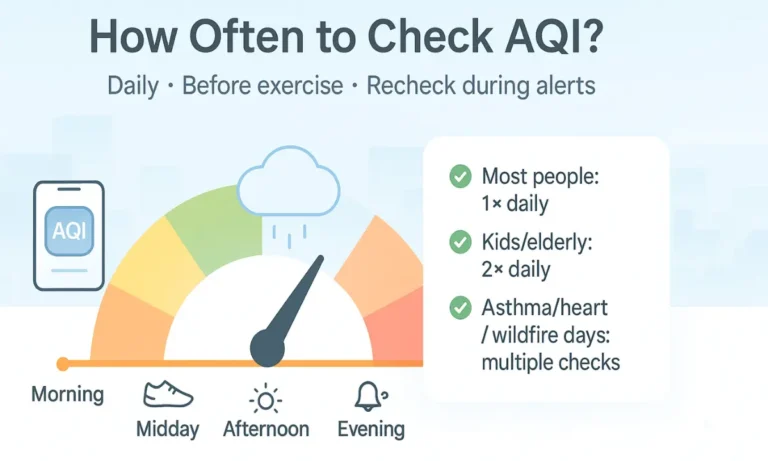
Many apps provide hourly and daily AQI forecasts. Checking AQI before leaving home helps prevent unnecessary exposure. Reliable data empowers healthier decisions.
Checking AQI colors before leaving home allows you to make informed, preventive health decisions.
Understanding Daily AQI Color Changes
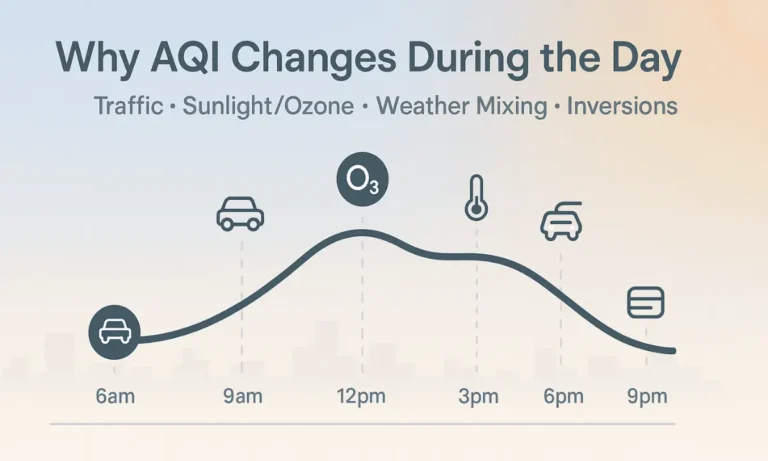
AQI colors often change throughout the day due to traffic volume, temperature, and wind patterns. Morning hours frequently show greener AQI, while afternoons may worsen, especially in urban areas.
Weather conditions play a significant role in pollution buildup or dispersion. Tracking daily trends improves planning accuracy.
Morning hours often show greener AQI, while afternoons may worsen in urban areas.
Common Misunderstandings About AQI Colors
“Yellow AQI is just as good as green.”
Yellow is acceptable, but green represents the healthiest air.
“Green AQI means zero pollution.”
Green does not mean pollution free only that pollution levels are low enough to be considered safe.
“AQI colors are the same everywhere.”
While categories are standardized, monitoring density and data resolution may vary by region.
Which AQI color means good air quality?
Green AQI color means good air quality. It represents an AQI range of 0 to 50, indicating very low pollution levels and minimal health risk for everyone.
Is green AQI safe for children, elderly people, and asthma patients?
Yes. Green AQI is considered safe for children, elderly individuals, pregnant women, and people with asthma or heart disease. No special precautions are required at this level.
Can I exercise outdoors when the AQI color is green?
Yes. Green AQI is ideal for outdoor exercise, including running, walking, cycling, and sports. Breathing efficiency is optimal, and pollution-related stress on the lungs and heart is minimal.
What does yellow AQI mean compared to green AQI?
Yellow AQI (51 to100) means air quality is acceptable but not ideal. Sensitive individuals may experience mild effects with long exposure. Green AQI represents the healthiest air, while yellow signals caution for vulnerable groups.
Does green AQI mean the air is completely pollution-free?
No. Green AQI does not mean zero pollution. It means pollutant levels are low enough to be considered safe and unlikely to cause health problems for the general population.
Understanding which AQI color means good air quality turns air-quality data into a practical health-protection tool. AQI colors transform invisible pollution into clear visual guidance that helps protect your lungs, heart, and long-term well-being.
When the AQI color is green, you can confidently enjoy outdoor activities knowing the air is clean and safe. When it is not, informed caution can significantly reduce health risks.
Check your local AQI color before outdoor activities
Use green AQI days for exercise and ventilation
Save this guide for future reference
Share it to help others understand AQI colors and health
FAQ:
Which AQI color means good air quality?
The green AQI color means good air quality. It represents an AQI range of 0 to 50, indicating very low pollution levels and minimal health risk for everyone.
Is green AQI safe for children, elderly people, and asthma patients?
Yes. Green AQI is considered safe for children, elderly individuals, pregnant women, and people with asthma or heart disease. No special precautions are required at this level.
Can I exercise outdoors when the AQI color is green?
Yes. Green AQI is ideal for outdoor exercise, including running, walking, cycling, and sports. Breathing efficiency is optimal, and pollution-related stress on the lungs and heart is minimal.
What does yellow AQI mean compared to green AQI?
Yellow AQI (51 to100) means air quality is acceptable but not ideal. Sensitive individuals may experience mild effects with long exposure. Green AQI represents the healthiest air, while yellow signals caution for vulnerable groups.
Does green AQI mean the air is completely pollution-free?
No. Green AQI does not mean zero pollution. It means pollutant levels are low enough to be considered safe and unlikely to cause health problems for the general population.
This content is for educational purposes only and does not replace professional medical advice. Individuals with respiratory or cardiovascular conditions should consult qualified healthcare professionals regarding air-quality exposure.