No, it is generally not safe to go outside when AQI is high.
High AQI means the air contains harmful pollutants that can affect breathing and overall health, especially for children, the elderly, and people with respiratory or heart conditions.
Stepping outside is something most people do without a second thought walking to work, exercising, sending children to school, or running daily errands. However, in today’s increasingly polluted environment, this ordinary action can expose the body to invisible yet harmful substances. Air pollution has transformed outdoor exposure into a health decision rather than a neutral activity.
Pollution sources such as vehicle exhaust, industrial emissions, construction dust, and wildfire smoke often raise air pollution levels beyond what the human body can safely tolerate. The danger lies in the fact that polluted air does not always cause immediate discomfort. Instead, damage often begins silently at the cellular level, especially in the lungs and cardiovascular system.
This is why the question of whether it is safe to go outside when the AQI is high has become essential. Understanding AQI allows individuals to evaluate risk, reduce unnecessary exposure, and protect both short terms wellbeing and long-term health.
This guide explains:
- What “high AQI” actually means in practical, real-world terms
- When going outside becomes unsafe based on AQI levels
- How polluted air affects the lungs, heart, and entire body
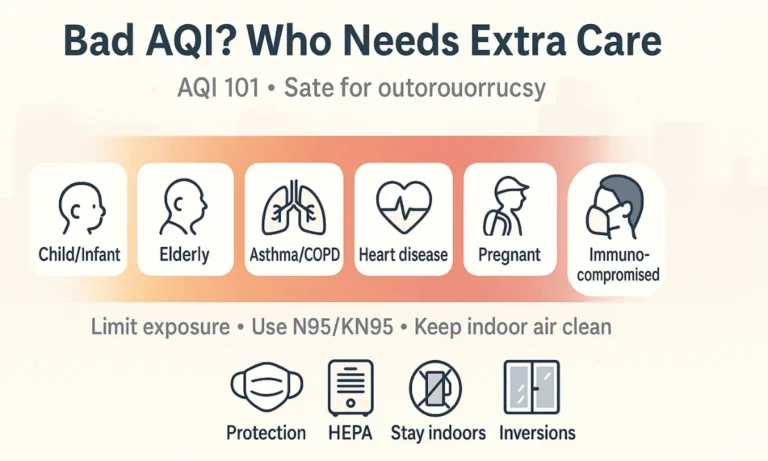
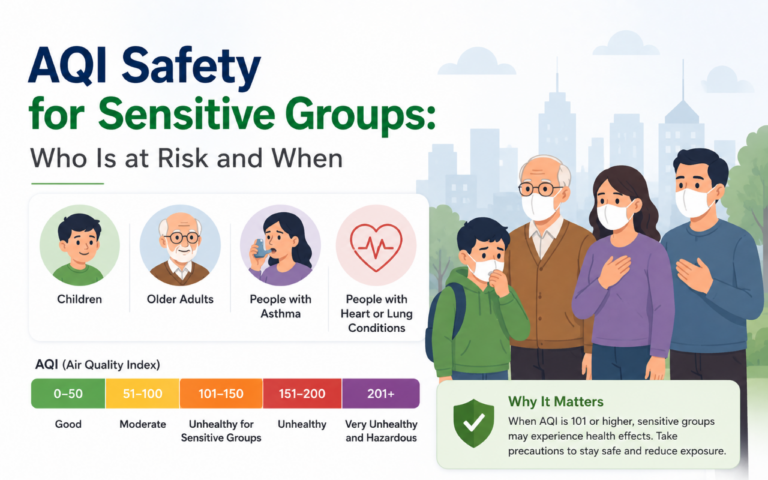
- Who is most vulnerable during high AQI conditions
- How different outdoor activities change exposure risk
- Priority-based actions to reduce harm when outdoor exposure is unavoidable
“High AQI” refers to air pollution levels that exceed what is considered safe for regular human exposure. The Air Quality Index (AQI) exists to translate complex environmental measurements into clear guidance the public can use daily.
Understanding AQI Values in Practical Terms
AQI ranges from 0 to 500, with higher numbers indicating greater pollution and health risk.
- Lower AQI values represent cleaner air and minimal biological stress
- Higher AQI values represent polluted air capable of triggering inflammation and organ strain
AQI is designed as a preventive public health warning system, meaning it signals danger before widespread illness occurs.
Which AQI Levels Are Considered High?
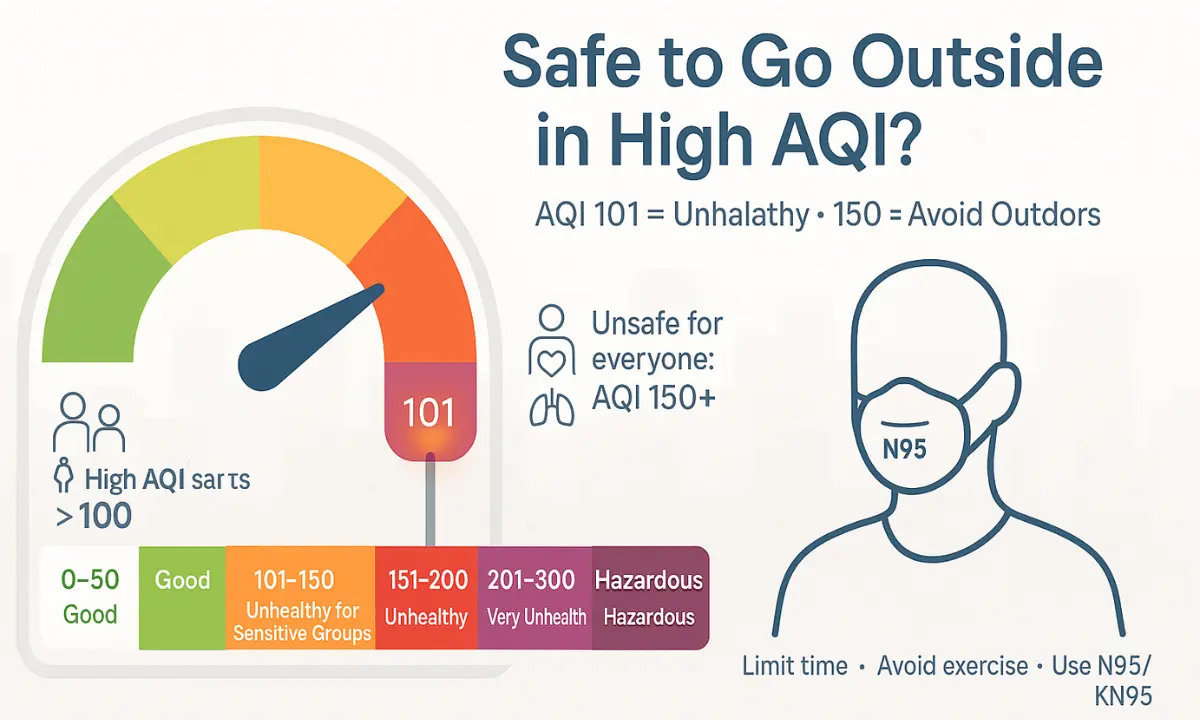
AQI is generally considered high once it exceeds 100. At this point:
- Pollutant concentrations surpass levels considered safe for continuous exposure
- Sensitive groups may begin experiencing symptoms
- Healthy individuals may experience physiological stress with prolonged exposure
Above AQI 150, air quality is unhealthy for everyone.
A Clear, Practical Framework
Whether it is safe to go outside depends on three interacting factors:
- How high the AQI is
- How long does the exposure last
- Who is being exposed?
When Outdoor Exposure May Still Be Acceptable
AQI 51 to 100 (Moderate)
At this level:
- Healthy adults can usually tolerate short outdoor exposure
- Light activities such as walking or essential errands are acceptable
- The body can often manage the pollutant load without lasting harm
However, long outdoor stays or intense exercise can significantly increase inhaled pollution.
When Outdoor Exposure Becomes Unsafe
AQI 101 to 150
- Unsafe for children, elderly individuals, and people with respiratory or heart conditions
- Healthy adults should shorten outdoor time and avoid exertion
AQI 151 and above
- Unsafe for everyone
- Outdoor exposure should be avoided unless necessary
At this stage, the safest assumption is that outdoor air poses a health risk even during brief exposure.
High-AQI air contains pollutants that interfere with normal biological processes and affect multiple organ systems.
Inflammation and Oxidative Stress Explained
When polluted air is inhaled:
- Lung tissue becomes irritated
- Immune responses trigger inflammation
- Oxidative stress damages cells and blood vessels
These effects can spread beyond the lungs, affecting the heart, brain, and immune system.
Short Term Health Effects (Hours to Days)
- Eye, nose, and throat irritation
- Persistent coughing or wheezing
- Chest tightness and breathing discomfort
- Fatigue, headaches, or dizziness
Physical activity intensifies these effects by increasing breathing depth and rate.
Long-Term Health Consequences (Months to Years)
Repeated exposure to high AQI contributes to serious long-term diseases. These include asthma development, chronic obstructive pulmonary disease (COPD), and cardiovascular disorders.
|
Children exposed to pollution may experience reduced lung growth. Long-term exposure is also linked to cognitive decline and increased mortality risk. PM2.5 plays a central role in these outcomes.
Why PM2.5 Is Especially Dangerous
PM2.5 particles are extremely small and dangerous because they:
- Bypass natural airway filters
- Penetrate deep lung tissue
- Enter the bloodstream
- Cause systemic inflammation
PM2.5 particles are extremely small and bypass the body’s natural airway defenses. They penetrate deep into lung tissue and enter the bloodstream. Once inside, they trigger systemic inflammation affecting the heart, brain, and immune system. This explains their strong link to heart attacks, strokes, and neurological stress. PM2.5 is considered the most harmful air pollutant.
This widespread impact explains their strong association with heart disease, neurological stress, and early mortality.
Children and Infants
- Higher breathing rate per body weight
- Developing lungs are more vulnerable
- Early exposure can permanently reduce lung capacity
Children breathe more air per unit of body weight, increasing pollutant intake. Their lungs and immune systems are still developing, making them highly sensitive. Early exposure can permanently reduce lung capacity. Pollution also increases the risk of childhood asthma. Protecting children during high AQI events is critical.
Older Adults
- Reduced lung elasticity
- Increased cardiovascular vulnerability
- Higher risk of pollution-triggered medical events
Older adults often have reduced lung elasticity and existing health conditions. Air pollution increases cardiovascular strain and the risk of medical emergencies. Even moderate AQI can trigger symptoms. Recovery from pollution-related stress is slower in older populations. Extra precautions are essential during pollution events.
People with Asthma, COPD, or heart disease
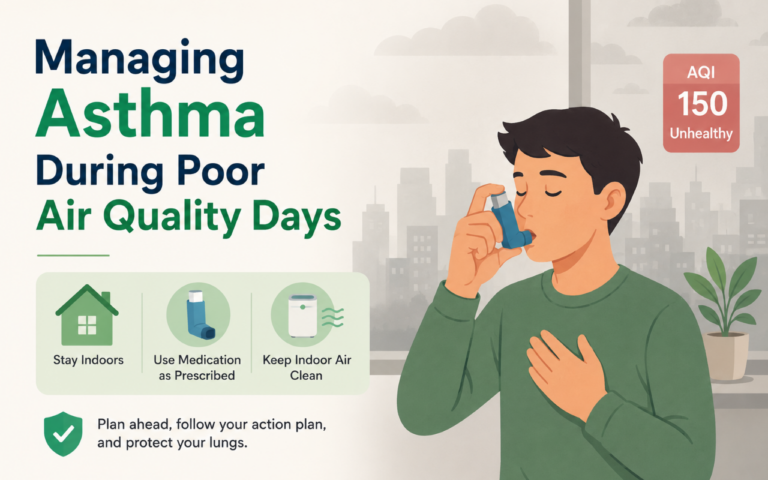
High AQI can trigger asthma attacks, COPD flare-ups, and cardiac events. Symptoms may appear even before AQI reaches 100. Medication effectiveness may decrease during pollution exposure. Emergency risk increases significantly at AQI above 150. These individuals should strictly limit outdoor exposure.
- Pollution can trigger attacks and emergencies
- Symptoms may appear even before AQI reaches 100
Pregnant Individuals
Exposure to polluted air during pregnancy is linked to low birth weight and premature delivery. PM2.5 can cross biological barriers, affecting fetal development. Long-term developmental risks are also being studied. Pregnant individuals should avoid high AQI exposure whenever possible.
- Exposure is linked to low birth weight and premature delivery
Is It Safe to Exercise Outside?
Exercise dramatically increases pollutant intake.
Exercise increases breathing depth and rate, dramatically raising pollutant intake. Outdoor exercise should be avoided above AQI 150. Between AQI 101-150, intensity should be reduced. Indoor workouts are safer during pollution events. Physical fitness does not protect against pollution damage.
General guidance:
- Avoid outdoor exercise above AQI 150
- Reduce intensity between AQI 101 to 150
- Prefer indoor workouts during pollution events
Walking, Commuting, and Daily Errands
When outdoor exposure is unavoidable:
- Keep trips short
- Avoid traffic heavy roads
- Choose times of day when AQI is lower
When outdoor exposure is unavoidable, trips should be kept short. Avoid traffic-heavy roads where emissions are concentrated. Choose times when AQI is lowest, often early morning or after rain. Wearing a proper mask can reduce exposure. Planning reduces cumulative risk.
Is Staying Indoors Always Safer?
Staying indoors is usually safer, but only if indoor air quality is controlled. Pollution can infiltrate buildings through doors, windows, and ventilation. Long indoor exposure to polluted air can still be harmful. Indoor air management is essential during high AQI events.
How to Improve Indoor Air During High AQI
Clean indoor air significantly reduces health risk.
- Use HEPA grade air purifiers
- Keep windows and doors closed during pollution peaks
- Avoid smoking, candles, and incense
- Ventilate only when the outdoor AQI improves
Priority-Based Protection Strategy
At AQI 101-150, limit outdoor duration and avoid exertion. At AQI 151-200, avoid outdoor exposure and use N95 or KN95 masks if necessary. Above AQI 200, treat the situation as an environmental emergency. Stay indoors as much as possible. Protect vulnerable groups first.
AQI 151 to 200
- Avoid outdoor exposure
- Wear N95 or KN95 masks if necessary
- Keep exposure brief
AQI above 200
- Treat it as an environmental emergency
- Stay indoors as much as possible
Common Myths About Air Pollution
“Clear skies mean clean air.”
False. Fine particles are often invisible.
“Masks don’t help.”
False. Proper masks significantly reduce PM2.5 inhalation.
“Only sick people are affected.”
False. Healthy individuals also accumulate long-term damage.
FAQ
Is it safe to go outside when the AQI is high?
Above AQI 150, it is unsafe for everyone.
At what AQI should you stay indoors?
Staying indoors is strongly recommended above AQI 150.
Can I walk outside at AQI 120?
Short walks may be acceptable for healthy adults only.
Do masks help during high AQI?
Yes, N95 and KN95 masks reduce fine particle exposure.
Understanding whether it is safe to go outside when the AQI is high allows people to turn environmental data into meaningful health protection. While polluted air cannot always be avoided, awareness, planning, and smart precautions can dramatically reduce harm.
Check AQI before outdoor plans
Protect children and the elderly first
Save this guide for pollution events
Share to increase air quality awareness
FAQ:
Is it safe to go outside when AQI is high?
It depends on how high the AQI is. When AQI rises above 100, sensitive groups may be affected. When AQI reaches 150 or higher, outdoor exposure becomes unsafe for everyone and should be avoided unless absolutely necessary.
At what AQI level should you stay indoors?
Staying indoors is strongly recommended when AQI is above 150. At this level, air pollution can cause health effects even during short exposure, especially without protective measures
Can healthy adults go outside when AQI is between 101 and 150?
Healthy adults may tolerate short, low-intensity outdoor activities at AQI 101–150, such as brief walking or essential errands. However, prolonged exposure or physical exertion should be avoided.
Who is most at risk during high AQI conditions?
Children, elderly individuals, pregnant people, and those with asthma, COPD, heart disease, or weakened immunity are most vulnerable. These groups should limit outdoor exposure even when AQI is just moderately high.
Do masks help when going outside during high AQI?
Yes. Properly fitted N95 or KN95 masks significantly reduce inhalation of fine particles like PM2.5. Cloth or surgical masks do not provide adequate protection against air pollution.
This content is for informational purposes only and does not replace professional medical advice. Individuals with respiratory or cardiovascular conditions should consult qualified healthcare professionals regarding pollution exposure.
guiadenoivos.saojosedojardimeuropa.com.br
beyond.globalpranichealing.com