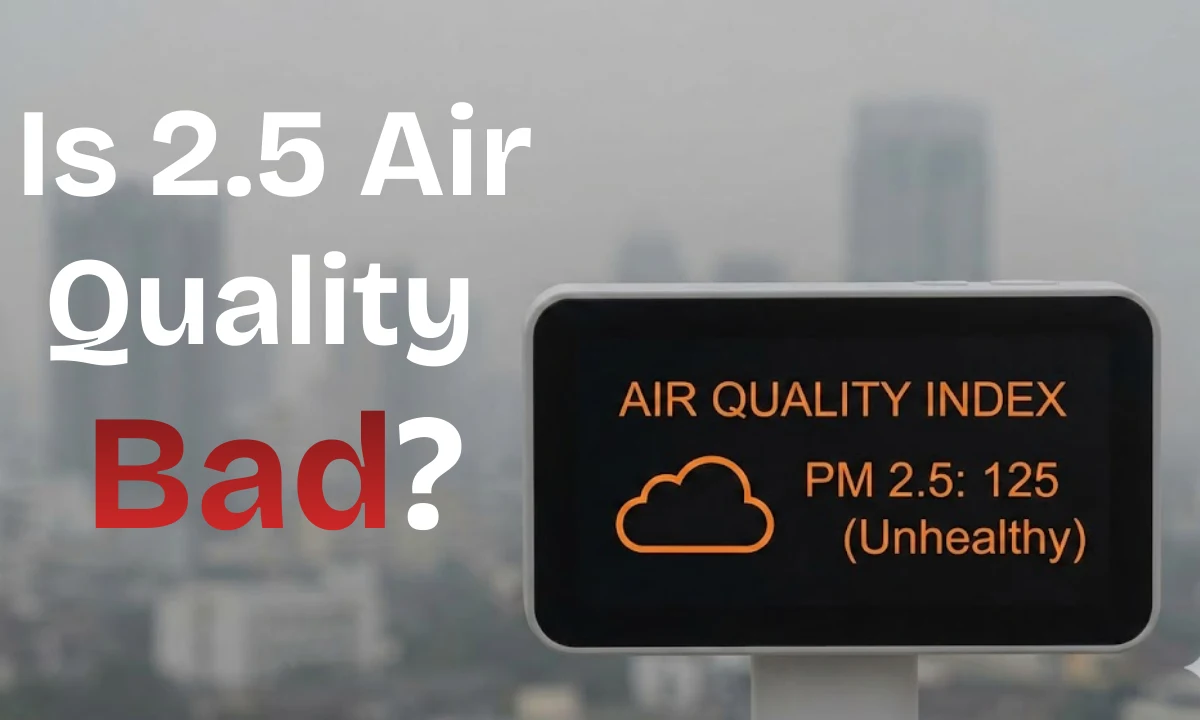
It is safe when PM2.5 levels are low, but it becomes unhealthy when concentrations are high, as fine particles can enter the lungs and affect breathing and heart health.
When people talk about air quality, the term PM2.5 often comes up. Many users wonder whether PM2.5 air quality is bad and what it really means for health. The answer depends on how high the PM2.5 level is and how long you are exposed to it.
What Does PM2.5 Mean?
PM2.5 stands for fine particulate matter that is 2.5 micrometers or smaller in size. These particles are extremely tiny and cannot be seen with the naked eye. Because of their small size, they can be inhaled deep into the lungs and may even enter the bloodstream.
PM2.5 comes from sources such as vehicle exhaust, factories, burning fuels, construction dust, wildfires, and household burning.
Is PM2.5 Air Quality Always Bad?
PM2.5 air quality is not always bad. It becomes harmful only when the concentration is high.
- Low PM2.5 levels mean the air is clean and safe
- High PM2.5 levels mean the air is polluted and unhealthy
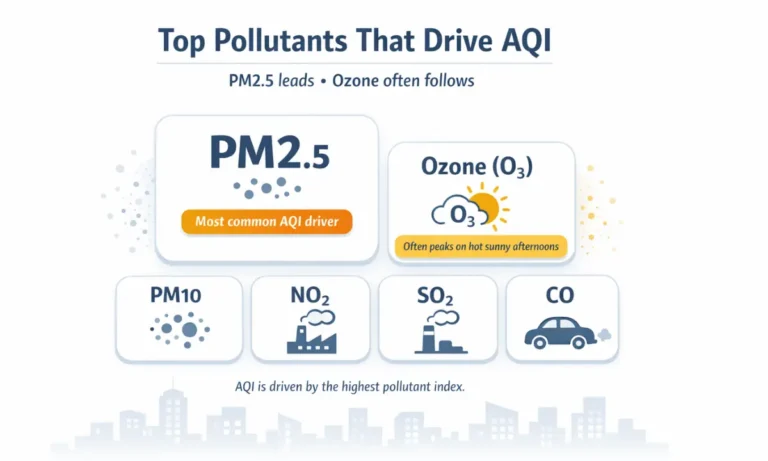
PM2.5 is one of the most important pollutants used to calculate the Air Quality Index (AQI).
PM2.5 Levels and What They Mean
Here is a simple way to understand PM2.5 levels:
- 0 to 12 µg/m³: Good air quality and safe to breathe
- 12.1 to 35.4 µg/m³: Moderate air quality
- 35.5 to 55.4 µg/m³: Unhealthy for sensitive groups
- 55.5 µg/m³ and above: Unhealthy for everyone
When PM2.5 stays low, the air feels fresh. When it rises, breathing becomes harder and health risks increase.
Why PM2.5 Is Considered Dangerous
PM2.5 particles are dangerous because they stay in the air for a long time and easily enter the lungs. Long term exposure to high PM2.5 levels can affect breathing, heart health, and overall well being.
Short term exposure may cause coughing, throat irritation, eye discomfort, and tiredness. People with asthma or heart problems may feel symptoms sooner.
Who Is Most Affected by High PM2.5?
Some people are more sensitive to PM2.5 pollution and should be extra careful.
This includes:
- Children
- Elderly people
- Pregnant women
- People with asthma or lung conditions
- People with heart disease
These groups should limit outdoor activities when PM2.5 levels are high.
How PM2.5 Affects AQI
PM2.5 is often the main reason AQI becomes unhealthy. Even when other pollutants are low, high PM2.5 alone can push AQI into unhealthy levels. That is why PM2.5 is closely monitored in air quality reports.
How to Protect Yourself From High PM2.5
When PM2.5 levels are high, you can reduce exposure by taking simple steps.
Stay indoors when possible, keep windows closed, avoid outdoor exercise, and use air purifiers if available. Wearing a proper mask outdoors can also help reduce inhalation of fine particles.
PM2.5 air quality is only bad when the levels are high. Low PM2.5 levels are safe and healthy, while high levels can harm breathing and overall health. Checking PM2.5 values along with AQI helps you understand how clean the air really is and when to take precautions.
guiadenoivos.saojosedojardimeuropa.com.br
beyond.globalpranichealing.com