
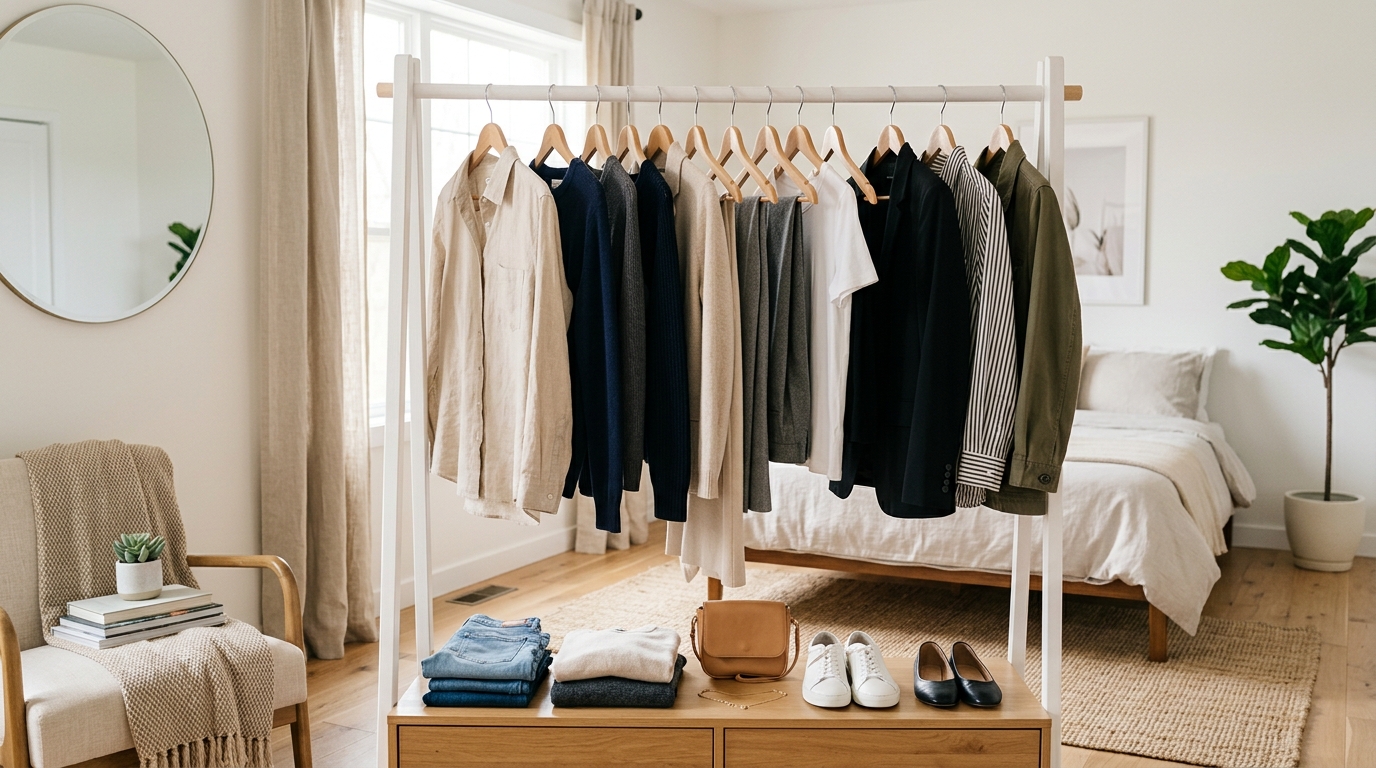
What Is a Capsule Wardrobe? A Guide to Minimalist Style
You open your closet, stare at a rack of clothes, and still feel like you have nothing to wear. If that sounds familiar, you’re not alone. A 2020 survey by ClosetMaid found that the average American wears only 20% of their wardrobe regularly. That means 80% of your clothes just sit there. A capsule wardrobe flips that ratio. It’s a curated collection of essential, versatile pieces that you love and wear often. Think of it as a small, intentional closet that makes getting dressed easier and less stressful. In this guide, we’ll explain what a capsule wardrobe is, its benefits, and how to build your own.
What Exactly Is a Capsule Wardrobe?
A capsule wardrobe is a mini wardrobe made up of interchangeable items that reflect your personal style and fit your lifestyle. The term was coined by Susie Faux, a London boutique owner, in the 1970s. She suggested women build a core collection of timeless pieces like a tailored blazer, a quality skirt, and well-fitting trousers. Designer Donna Karan popularized the idea in 1985 with her “Seven Easy Pieces” collection, which showed how seven items could create a month’s worth of outfits.
Today, the concept has evolved. Some people aim for a specific number, like 33 items (the number popularized by blogger Courtney Carver’s Project 333). Others simply focus on quality over quantity. The key is that every piece works with multiple others. You’re not just throwing clothes together; you’re building a system. In practice, a capsule wardrobe might include 20 to 40 items, including tops, bottoms, dresses, outerwear, and shoes. It doesn’t include underwear, sleepwear, or workout gear, since those are necessities you replace regularly.
What a Capsule Wardrobe Is Not
It’s not a uniform. You’re not limited to black and white. You can include colors, patterns, and textures you love. It’s not a one-time project. Seasons change, bodies change, and lifestyles change, so your capsule should adapt. And it’s not about deprivation. You’re not giving up style; you’re refining it. As minimalism expert Joshua Becker puts it, “Owning less is better than organizing more.” A capsule wardrobe is about owning less but wearing more.
The Benefits of a Capsule Wardrobe
Beyond a tidy closet, a capsule wardrobe offers practical perks that can simplify your life and even save you money.
- Saves time. Decision fatigue is real. A study in the Journal of Personality and Social Psychology found that making many decisions depletes your mental energy. With fewer options, you spend less time staring at your closet and more time doing what matters.
- Saves money. When you buy less but choose better, you avoid impulse purchases. You invest in pieces you’ll wear for years, not fast fashion that falls apart after a few washes. A 2019 report by thredUP estimated the average American spends $1,200 on clothes annually, but many items go unworn. A capsule helps you redirect that spending.
- Reduces stress. Clutter can increase cortisol levels. A 2010 study by researchers at UCLA found that women with cluttered homes had higher levels of the stress hormone. A streamlined wardrobe creates a calmer environment.
- Boosts confidence. When every piece fits well and flatters you, you feel better in what you wear. You’re not hiding in ill-fitting clothes; you’re showcasing your style.
- Supports sustainability. The fashion industry produces 10% of global carbon emissions, according to the UN Environment Programme. By buying fewer, higher-quality items, you reduce your environmental footprint.
These benefits compound over time. You’ll find you shop less, enjoy your clothes more, and feel more put-together every day.
How to Build Your Capsule Wardrobe
Building a capsule wardrobe is a process, not an overnight overhaul. Follow these steps to create a collection that works for you.
1. Assess Your Lifestyle
Start by tracking what you actually wear for two weeks. Note the activities you do: work, casual outings, workouts, social events. If you work from home, you don’t need five suits. If you’re a teacher, you need comfortable shoes and washable fabrics. Your capsule should reflect your real life, not a fantasy version of it.
2. Choose a Color Palette
Pick a base of two to three neutrals (like navy, gray, black, or beige) and one or two accent colors. This makes mixing and matching easy. For example, a base of navy, white, and gray with accents of blush and olive allows for countless combinations. Stylist Alison Freer recommends choosing colors that make you feel good, not just what’s trendy.
3. Select Your Pieces
A typical capsule might include:
- 2 pairs of pants (e.g., jeans and tailored trousers)
- 1 skirt or dress
- 5 tops (t-shirts, blouses, sweaters)
- 1 blazer or cardigan
- 1 coat or jacket
- 2 pairs of shoes (e.g., sneakers and flats or boots)
- 1 handbag
Adjust quantities based on your needs. If you work in a corporate office, you might have more blazers and fewer casual tops. The goal is versatility. Each piece should work with at least three others.
4. Edit and Refine
Once you’ve pulled your capsule, try on each item. Does it fit? Is it comfortable? Does it match your palette? If not, set it aside. You can donate, sell, or store items you’re not ready to part with. After a few weeks, you’ll see what’s missing. Maybe you need another pair of shoes or a layering piece. Add slowly, and only if it fills a gap.
5. Maintain Your Capsule
A capsule isn’t static. At the start of each season, review your wardrobe. Replace worn-out items, and swap in pieces for the new weather. If you buy something new, remove something old to keep the balance. This keeps your closet fresh without overflowing.
Common Mistakes to Avoid
Even with good intentions, people often stumble when building a capsule. Here’s what to watch out for.
- Copying someone else’s capsule. Your wardrobe should fit your life, not a blogger’s. What works for a minimalist in San Francisco might not work for a parent in Minneapolis.
- Choosing style over comfort. If you don’t love wearing it, you won’t. Prioritize fit and feel.
- Going too small too fast. Don’t purge everything at once. Start with a mini-capsule of 10 items and expand as you learn what you need.
- Ignoring the weather. If you live in a place with four distinct seasons, you’ll need a seasonal capsule, not one year-round collection.
- Forgetting about maintenance. Quality pieces need care. Read labels, wash gently, and repair when needed to extend their life.
By avoiding these pitfalls, you’ll create a capsule that truly serves you.
Conclusion
A capsule wardrobe is more than a fashion trend; it’s a practical approach to getting dressed. By focusing on quality, versatility, and personal style, you can simplify your mornings, save money, and reduce stress. Start small, be patient, and adjust as you go. Your future self will thank you for a closet that works as hard as you do.
Q: How many items should be in a capsule wardrobe?
There’s no fixed number. Some people aim for 33 items (Project 333), while others prefer 20 to 40. The right number depends on your lifestyle, climate, and how often you do laundry. The goal is to have only pieces you wear regularly, so start with a small number and adjust as needed.
Q: Can I include patterns and colors in a capsule wardrobe?
Absolutely. A capsule wardrobe isn’t limited to neutrals. You can include patterns and colors you love, as long as they coordinate with other pieces. A good rule is to choose a base of neutrals and add one or two accent colors or patterns that mix easily. This keeps your wardrobe versatile and personal.
Q: How often should I update my capsule wardrobe?
Review your capsule at the start of each season. Swap out items that don’t fit the weather or your current lifestyle. Replace worn-out pieces and add new ones only if they fill a gap. A seasonal review keeps your wardrobe fresh without accumulating excess.
Q: Is a capsule wardrobe only for women?
No, anyone can benefit from a capsule wardrobe. The concept applies to all genders. Men’s capsules often include items like jeans, t-shirts, button-downs, a blazer, and versatile shoes. The principles of quality, versatility, and personal style are universal.
Q: What do I do with clothes I remove from my capsule?
You have several options: donate to charity, sell online or at consignment shops, or store items you’re not ready to part with. If you store them, set a reminder to revisit in six months. If you haven’t missed them, it’s safe to let them go.