What Is End-to-End Encryption? A Clear Explanation
When you send a message on WhatsApp or Signal, it’s scrambled so only you and the recipient can read it. That’s end-to-end encryption (E2EE) in action. But what exactly does it mean, and why should you care? This guide breaks it down without the jargon.
At its core, end-to-end encryption is a method of secure communication where only the sender and receiver can read the messages. Not even the service provider, like WhatsApp or Google, can access the content. It’s like sending a locked box that only the recipient has the key to. The concept dates back to the 1970s with the Diffie-Hellman key exchange, but it’s become mainstream thanks to apps like WhatsApp and Signal.
In 2023, over 2 billion people use WhatsApp, which has E2EE by default. That’s a lot of encrypted messages. But what does it actually protect you from? And what are the limits? Let’s find out.
How End-to-End Encryption Works
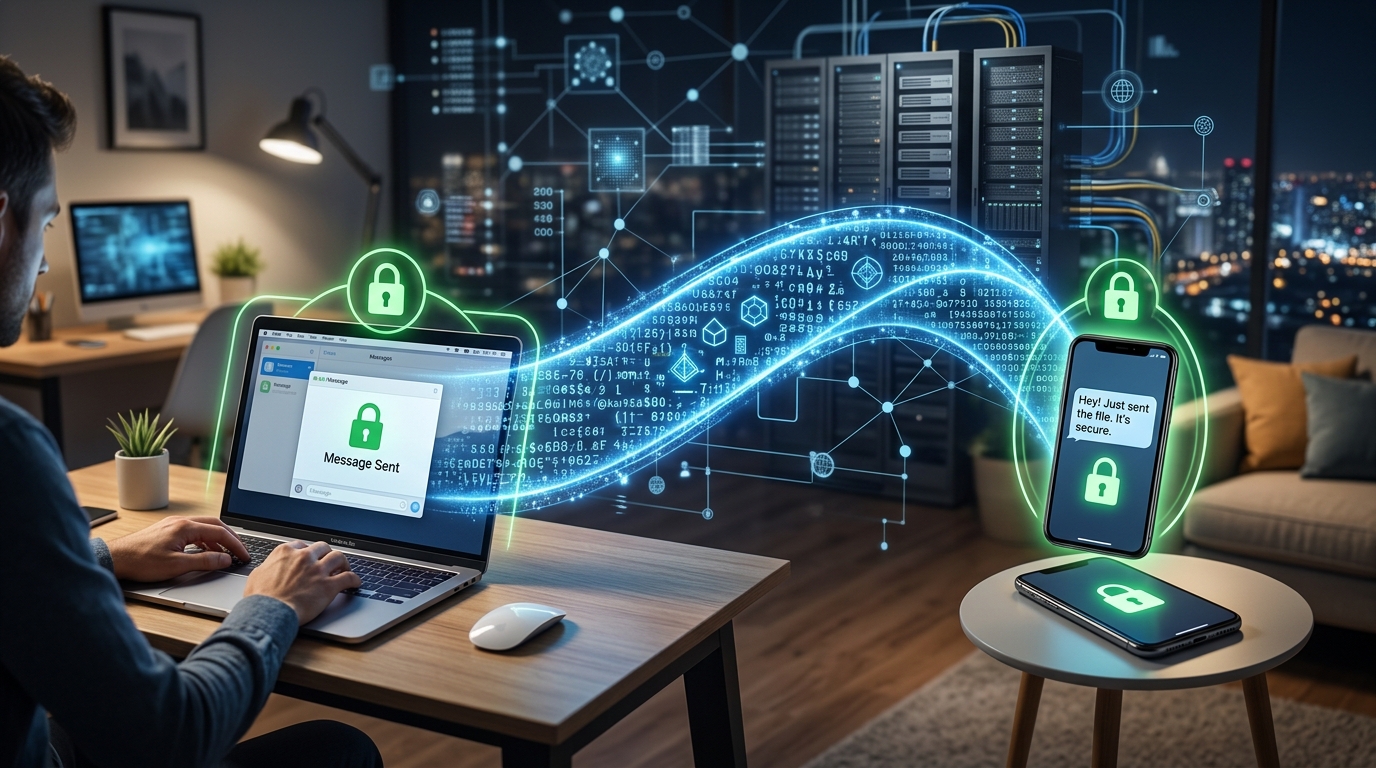
Encryption is the process of converting plaintext (readable data) into ciphertext (unreadable data). In E2EE, this happens on your device before the message is sent. The message stays encrypted as it travels through the internet and is only decrypted on the recipient’s device.
The magic lies in the keys. Each user has a pair of cryptographic keys: a public key and a private key. The public key can be shared openly, while the private key is kept secret. When you send a message, it’s encrypted using the recipient’s public key. Only the corresponding private key can decrypt it. This is known as asymmetric encryption.
But asymmetric encryption is slow for large messages. So, most E2EE systems use a hybrid approach. They generate a symmetric key (a single key used for both encryption and decryption) for the session, encrypt the message with that, and then encrypt the symmetric key with the recipient’s public key. This is how protocols like Signal Protocol work, which powers WhatsApp, Signal, and Google Messages’ RCS encryption.
In practice, when you send a message on Signal, your app generates a new symmetric key for that message, encrypts the message, then encrypts the key with the recipient’s public key. The recipient decrypts the key with their private key, then decrypts the message. All of this happens in milliseconds.
Why End-to-End Encryption Matters
E2EE protects your privacy in several ways. First, it prevents eavesdropping. Without E2EE, your messages are encrypted in transit (like HTTPS) but decrypted on the server. That means the service provider can read them, and so can anyone who compromises the server. With E2EE, the server only sees ciphertext.
Second, it protects against man-in-the-middle attacks. Because the keys are exchanged directly between users, an attacker can’t intercept and read messages without being detected. In 2016, WhatsApp added a security code verification feature that lets users confirm their encryption keys, further preventing MITM attacks.
Third, it’s a safeguard against data breaches. If a server holding encrypted messages is hacked, the attacker gets nothing but gibberish. In 2021, a vulnerability in WhatsApp’s image processing was patched, but even if exploited, it wouldn’t have exposed the content of E2EE messages.
However, E2EE isn’t perfect. It doesn’t hide metadata, like who you’re talking to and when. Law enforcement sometimes argues it hinders investigations. In 2020, the UK’s GCHQ proposed a “ghost protocol” to allow law enforcement access without breaking encryption, but it was widely criticized by security experts.
Where You’ll Find End-to-End Encryption
E2EE is used in many apps and services. Here are some common ones:
- WhatsApp: All messages, calls, and video chats are E2EE by default. With over 2 billion users, it’s the largest E2EE platform.
- Signal: Considered the gold standard, it’s open-source and uses the Signal Protocol. Even the metadata is minimized.
- Apple iMessage: E2EE for messages between Apple devices, but backups can be unencrypted unless you enable Advanced Data Protection.
- Google Messages: RCS chats between Android users are E2EE, but only in one-on-one and group chats, not SMS.
- ProtonMail: E2EE for emails between ProtonMail users, and optional for external emails.
- Zoom: Offers E2EE for meetings, but it’s not enabled by default and some features are limited.
Not all apps with “encryption” use E2EE. For example, standard SMS is not encrypted, and many email providers use transport encryption (TLS) but not E2EE. Facebook Messenger uses E2EE only in “Secret Conversations,” not regular chats.
How to Verify Your Encryption
If you’re using an app with E2EE, you might want to verify that it’s actually working. Most apps provide a way to check the security code. In WhatsApp, open a chat, tap the contact’s name, then tap “Encryption” to see a QR code and a 60-digit security code. You can compare this with your contact in person or over another channel to ensure no one is intercepting.
In Signal, tap the contact’s name, then “View safety number.” You can verify it by scanning the QR code or comparing the numbers. If they match, your chat is secure.
It’s a good practice to verify encryption for sensitive conversations, especially with new contacts. But remember, E2EE only protects the content of messages. Your device security matters too. If your phone is compromised, E2EE won’t help.
Common Misconceptions About End-to-End Encryption
There are several myths surrounding E2EE. Let’s clear them up.
Myth 1: E2EE means no one can ever read your messages. While it’s true that the service provider can’t read them, the recipient can, and they can screenshot or forward. Also, if your device is infected with malware, your messages can be read.
Myth 2: E2EE is only for criminals. E2EE protects everyone: journalists, activists, businesses, and everyday users. It’s a fundamental security measure, like a lock on your front door.
Myth 3: E2EE is too complicated for average users. It’s invisible. You don’t have to do anything to enable it in WhatsApp or Signal. The encryption happens automatically.
Myth 4: E2EE backdoors are possible without weakening security. Security experts like Bruce Schneier argue that any backdoor inherently weakens security for everyone. There’s no way to give only “good guys” access.
The Future of End-to-End Encryption
E2EE is becoming more widespread. In 2023, Google announced that RCS messaging would have E2EE by default, but it’s still rolling out. The EU’s Digital Markets Act might force companies like Meta to interoperate with smaller messaging apps, which raises questions about how E2EE will work across platforms.At the same time, governments are pushing for laws that would require backdoors. The UK’s Online Safety Bill, passed in 2023, could force messaging apps to scan for child sexual abuse material, which many argue is incompatible with E2EE. Signal and WhatsApp have threatened to leave the UK if forced to break encryption.
Despite these challenges, the trend is toward more encryption. Apple’s Advanced Data Protection, launched in 2022, extends E2EE to iCloud backups, photos, and notes. As more of our lives move online, E2EE will become as standard as HTTPS.
In practice, you should check if your messaging app uses E2EE and enable it if it’s optional. For sensitive conversations, use apps like Signal that prioritize privacy. And stay informed about laws that could affect your encryption.
Conclusion
End-to-end encryption is a powerful tool that keeps your digital conversations private. It’s not perfect, but it’s the best way to ensure that only you and the person you’re talking to can read your messages. Use apps that support it, verify your encryption when needed, and understand its limits. Your privacy is worth it.
Q: Is end-to-end encryption really unbreakable?
No, it’s not unbreakable. While the encryption itself is strong, it can be bypassed if your device is compromised or if the recipient shares the message. Also, metadata isn’t protected. So it’s highly secure but not invincible.
Q: Does end-to-end encryption hide who I’m talking to?
No, E2EE only encrypts the content of messages. Metadata like who you’re talking to, when, and for how long is often visible to the service provider. Some apps like Signal minimize metadata collection, but it’s not completely hidden.
Q: Can I use end-to-end encryption on email?
Yes, but it’s not automatic. Services like ProtonMail offer E2EE for emails between users, and you can use PGP for others. However, most email providers don’t use E2EE by default, so your messages are readable on their servers.
Q: Why do some governments oppose end-to-end encryption?
Governments argue that E2EE hinders law enforcement’s ability to investigate crimes like terrorism and child abuse. They want backdoors, but experts say any backdoor weakens security for everyone. It’s a ongoing debate between privacy and security.
Q: How can I tell if an app uses end-to-end encryption?
Check the app’s documentation or settings. Look for terms like “end-to-end encrypted” or “E2EE.” In WhatsApp, you’ll see a notice in the chat. In Signal, it’s always on. If it’s not mentioned, assume it’s not E2EE.