
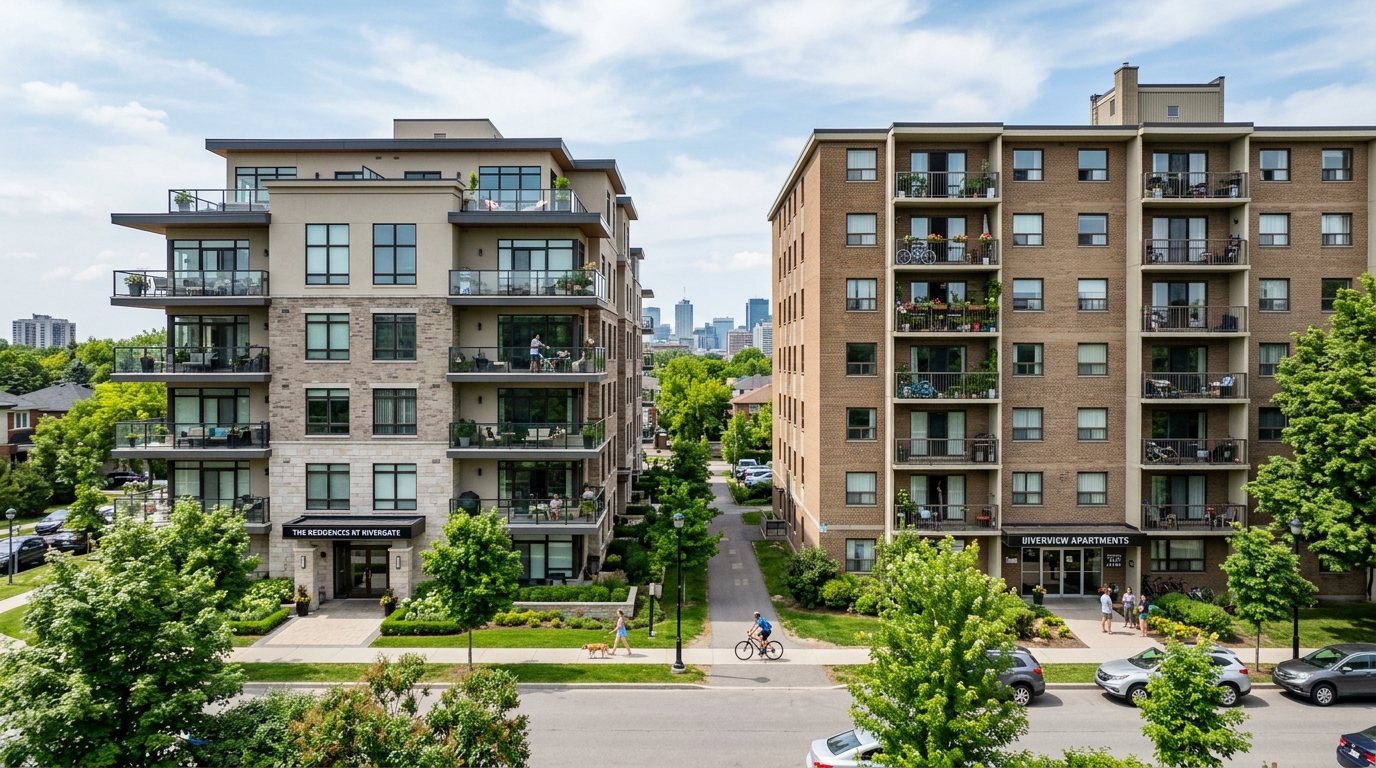
Condo vs Apartment: What’s the Difference?
When searching for a new home, you’ve probably seen the terms condo and apartment used interchangeably. But they’re not the same thing. The difference comes down to ownership, not the four walls you live in. A condo is a unit you can buy, while an apartment is typically a unit you rent. That single distinction shapes everything from your monthly costs to how quickly you can get a leaky faucet fixed. In practice, though, the lines blur. In some cities, all rentals are called apartments, even if the building is a condo. Confused? You’re not alone. Let’s break it down.
The Core Difference: Ownership vs. Rental
The simplest way to think about it: a condo is a type of ownership, and an apartment is a type of rental. When you buy a condo, you own the interior of your unit and share ownership of common areas like hallways, pools, and gyms with other owners. You’ll pay a monthly HOA fee to cover maintenance of those shared spaces. When you rent an apartment, you own nothing. The landlord or property management company owns the building and handles all repairs. You sign a lease, pay rent, and move out when the lease ends.
According to the National Association of Realtors, condos made up about 12% of existing home sales in 2023. That’s a significant chunk of the market, but still a minority compared to single-family homes. Apartments, on the other hand, house over 40 million renter households in the U.S., according to the Joint Center for Housing Studies at Harvard. So while condos are a popular entry point to homeownership, apartments dominate the rental landscape.
Why the Confusion Exists
In many U.S. cities, especially New York and San Francisco, any rental unit is called an apartment, regardless of whether the building is a condo. A condo owner might rent out their unit to a tenant, and that tenant would say they live in an apartment. So the physical space can be identical. The label depends on who owns it and whether you’re renting or buying. In the UK and Australia, the term ‘flat’ covers both, and ‘condo’ is rarely used. In Singapore, over 80% of residents live in HDB flats, which are government-built apartments, while private condos come with pools and security. So the vocabulary shifts by country.
How Ownership Affects Your Wallet
If you’re deciding between renting an apartment and buying a condo, the financial differences are stark. Renting an apartment usually means lower upfront costs. You’ll pay a security deposit, maybe first and last month’s rent, and that’s it. Buying a condo requires a down payment, closing costs, and ongoing expenses like mortgage interest, property taxes, and HOA fees. But you build equity over time. Every mortgage payment increases your ownership stake. When you rent, your landlord builds equity, not you.
HOA fees can be a dealbreaker. In 2023, the average monthly HOA fee for condos in the U.S. was around $300 to $400, according to data from Realtor.com. In high-rise buildings with doormen, pools, and fitness centers, fees can exceed $1,000 per month. Those fees cover shared expenses, but they also reduce your buying power. Lenders factor HOA dues into your debt-to-income ratio, so a $500 monthly fee can shrink your mortgage approval by tens of thousands of dollars.
Maintenance and Repairs
As a condo owner, you’re responsible for everything inside your unit. If your water heater bursts, you pay for it. The HOA handles the roof, the elevator, and the lobby. As an apartment renter, you call the landlord. A 2022 survey by Apartment List found that 62% of renters said maintenance responsiveness was a key reason they renewed their lease. When you rent, someone else deals with the clogged drain and the broken AC. That’s a real lifestyle difference, not just a financial one.
Size, Amenities, and Location
Condos and apartments often look identical. A 1,000-square-foot two-bedroom unit can be a condo in one building and an apartment in another. The difference is who owns it. But there are trends. Condos tend to be in buildings with more amenities because owners expect a return on their investment. Apartments, especially in large complexes, often have similar amenities like pools and gyms, but they’re managed by a single company. Condo amenities are managed by the HOA board, which is made up of owners. That means the quality of amenities can vary widely depending on how well the board manages the budget.
Location also plays a role. In suburban areas, apartments are often garden-style complexes with surface parking. Condos are more likely to be townhouse-style or mid-rise buildings. In cities, both can be in high-rises. In practice, the distinction matters most when you’re buying or selling. If you’re renting, you probably won’t care whether the building is a condo or an apartment complex. You just care about the rent, the location, and whether the landlord fixes things.
Rules and Restrictions
Condo owners live under HOA rules. Those rules can cover everything from paint colors to pet sizes to whether you can rent out your unit. Some HOAs cap the percentage of units that can be rented, which can make it harder to sell because buyers who want to rent it out can’t. Apartment renters live under lease terms. Those terms are usually less restrictive but can still ban pets, subletting, or major alterations. If you value freedom, a condo with a lax HOA might be better. If you want zero responsibility, an apartment rental wins.
When to Choose a Condo vs. an Apartment
Your choice depends on your goals. If you plan to stay put for at least five years, have stable income, and want to build equity, a condo could be a smart move. If you value flexibility, don’t want to deal with repairs, or plan to move within a few years, renting an apartment makes more sense. Here’s a quick breakdown:
- Choose a condo if: You want to own, build equity, and don’t mind HOA fees and rules. You’re ready for a long-term commitment.
- Choose an apartment if: You want flexibility, low upfront costs, and someone else to handle maintenance. You’re not sure where you’ll be in three years.
- Consider a condo rental if: You want the amenities of a condo without the ownership responsibilities. Many condo owners rent out their units, so you can get the best of both worlds.
One more thing: financing. Condo loans can be trickier than single-family home loans. Lenders often require the condo project to meet certain criteria, like having a high owner-occupancy rate. If too many units are rented out, the lender might deny your loan. That’s why it’s smart to get pre-approved before you start shopping. A 2023 report from the Community Associations Institute found that 35% of condo buyers had trouble securing financing due to HOA-related issues. So do your homework.
Conclusion
The difference between a condo and an apartment isn’t about the floor plan or the amenities. It’s about ownership. A condo is a unit you can buy, and an apartment is a unit you rent. That distinction drives everything from your monthly costs to your long-term wealth. If you’re ready to own, a condo offers a path to equity. If you value flexibility and low maintenance, an apartment rental is the way to go. Either way, you’ll know exactly what you’re signing up for.
Q: Can a condo be rented out like an apartment?
Yes, many condo owners rent out their units. However, the HOA may have rules about how many units can be rented at once. Some condos limit rentals to a certain percentage, like 20% or 30%. If you’re a renter, you might not even know the building is a condo unless you ask. The experience is similar to renting an apartment.
Q: Are condos always more expensive than apartments?
Not necessarily. It depends on the market. In some cities, buying a condo can be cheaper per month than renting an apartment, especially if you factor in tax deductions. But condos come with HOA fees and maintenance costs. Apartments have rent, which can rise annually. Compare total monthly costs, not just the sticker price.
Q: What’s the difference between a condo and a townhouse?
A townhouse is a style of building, usually multi-story and attached to other units. A condo is a form of ownership. You can have a condo that’s a townhouse, or a condo that’s a flat in a high-rise. The key is that condo owners share ownership of common areas and pay HOA fees. Townhouses can also be owned as fee-simple, meaning you own the land under your unit.
Q: Do I need a real estate agent to buy a condo?
You don’t legally need one, but it’s wise. A buyer’s agent can help you navigate HOA documents, financing requirements, and resale restrictions. According to the National Association of Realtors, 87% of buyers used an agent in 2023. Their commission is typically paid by the seller, so it costs you nothing out of pocket.
Q: Can I rent an apartment in a condo building?
Yes. Many condo owners rent out their units to tenants. You’d sign a lease with the owner, not a management company. You’d still use the building’s amenities and follow the HOA rules. Just be aware that the owner might sell the unit, and you could face a lease termination if the new owner wants to move in.